Ulama: A Ballgame Still in Motion
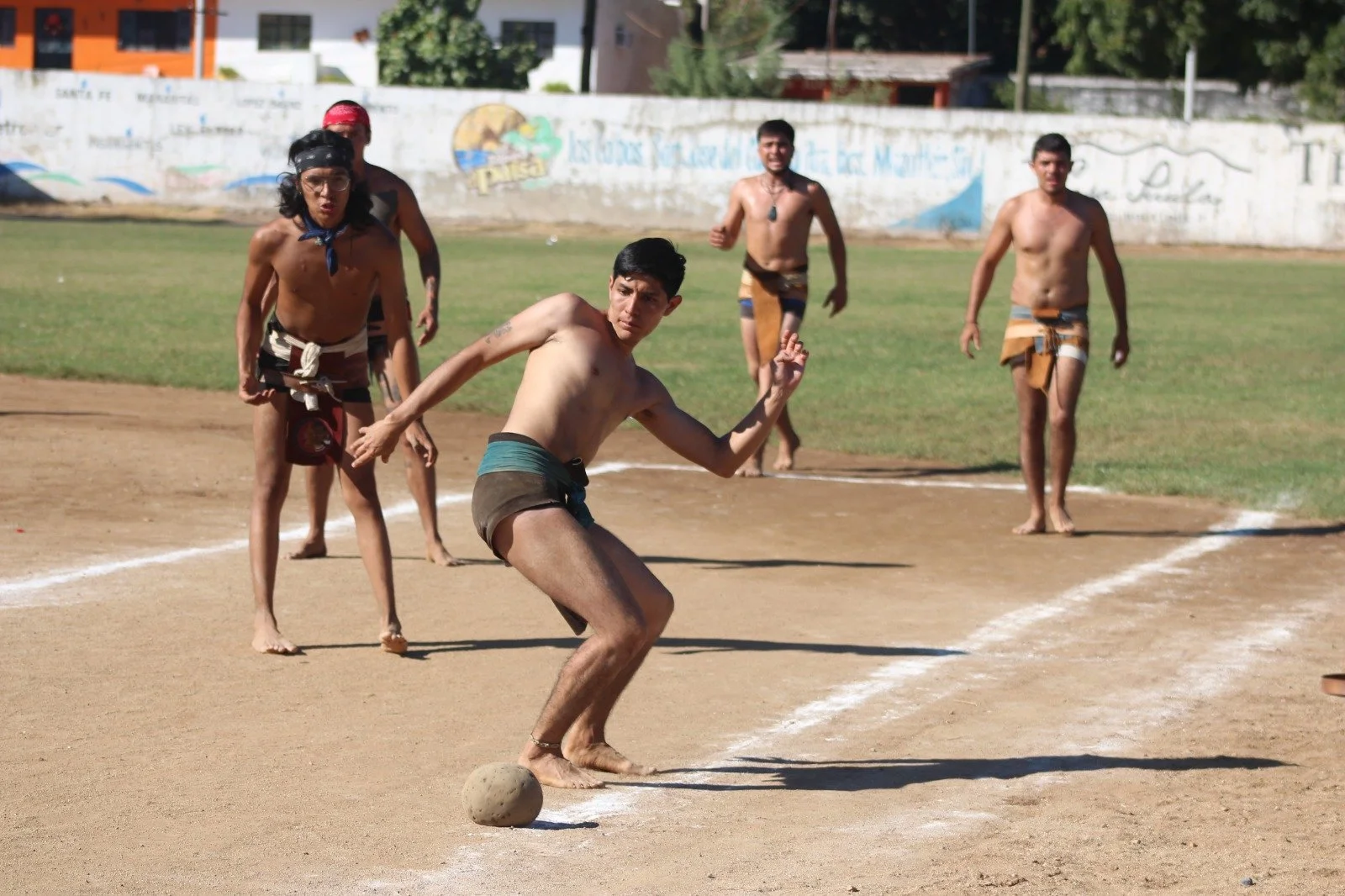
The Origins of the Mesoamerican Ballgame
Long before footballs were stitched from leather or basketballs filled with air, people in Mesoamerica learned to shape natural latex into a dense, elastic object that could be struck back and forth across a court. The exact birthplace of the game is still uncertain. Rubber balls recovered at El Manatí on Mexico’s Gulf Coast date to roughly 1600 BCE, while the earliest securely identified ballcourt at Paso de la Amada, Chiapas, dates to around 1400 BCE. Over the following three millennia, versions of the game spread across Mesoamerica, appearing among Olmec, Maya, Zapotec, Veracruz, Mixtec, Nahua and other societies.
There was never one single Mesoamerican ballgame. Courts changed, equipment changed and rules changed from place to place. Some players struck the ball with their hips or torso; elsewhere forearms or wooden implements were used. Certain later courts carried stone rings high on their walls, but sending the ball through a ring was not the universal purpose of the game. At its simplest, the central idea was movement: keep the heavy rubber ball alive and return it without using prohibited parts of the body.
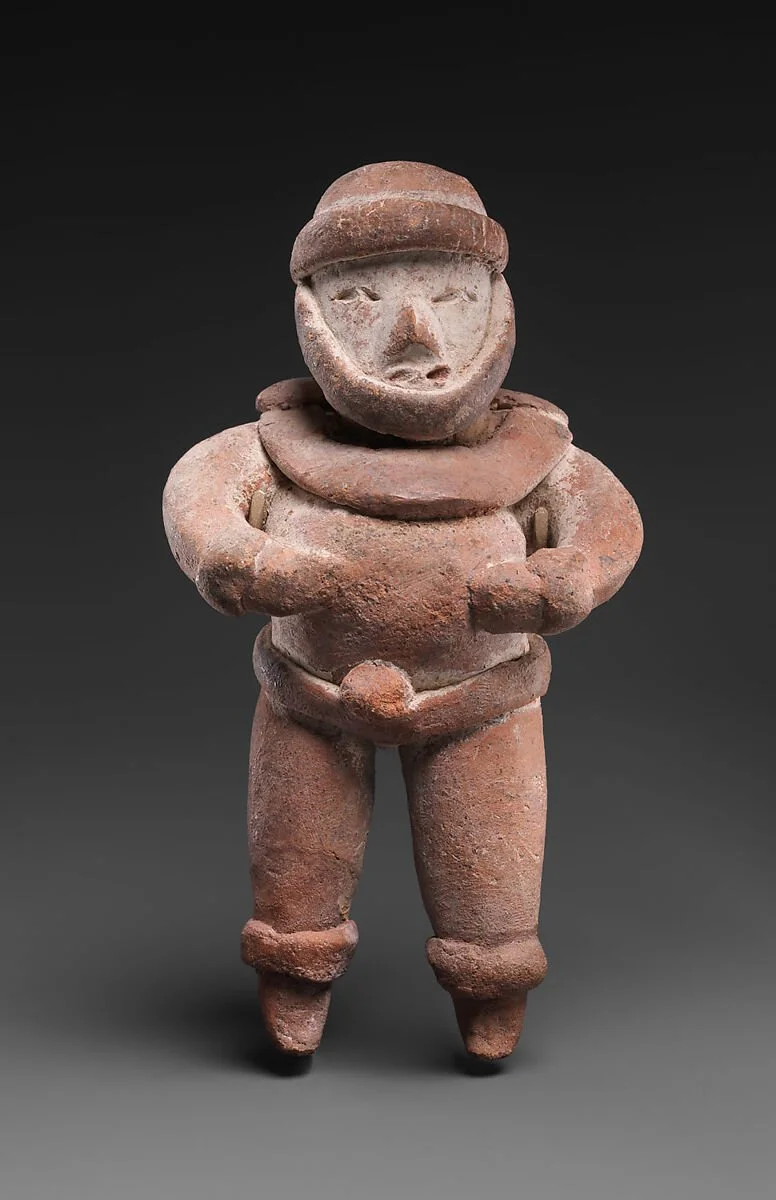
Ballplayer, Tlapacoya
1200–1000 BCE, Valley of Mexico
One of the earliest surviving representations of a Mesoamerican ballplayer. The raised arms, muscular body and distinctive stance give unusually early evidence for the game in Central Mexico.
Ollamaliztli in the Mexica World
By the height of Mexica power in the fifteenth and early sixteenth centuries, the game - known in Nahuatl as ollamaliztli was deeply established in the Central area of what is now Mexico. Spanish chroniclers described players trying to keep the ball continually in motion. The game could be entertainment, competition and a place for gambling, but it also carried meanings larger than sport. Across Mesoamerica, the ballcourt became connected to ideas of fertility, conflict, sacrifice, the underworld and the movement of celestial bodies. These meanings varied across cultures and periods; human sacrifice was associated with some ballgame rituals, but it should not be understood as the automatic conclusion of every match.
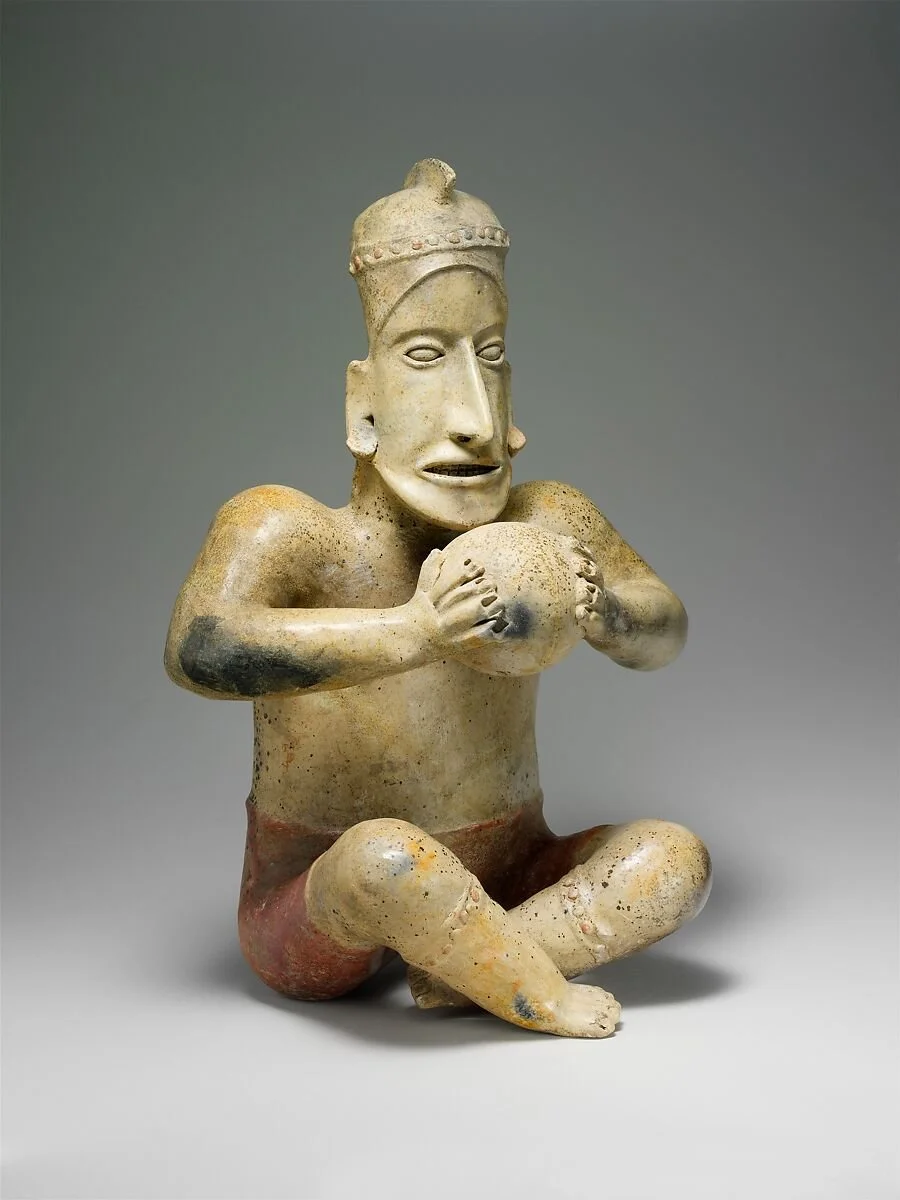
Seated Ballplayer, Ameca-Etzatlán
200 BCE–300 CE, Jalisco
Excellent reference for the ball itself, physique, loincloth, hair/headwear and player representation in western Mexico. Particularly relevant because modern ulama survives in western/northwestern Mexico.
Ulama’s Survival After the Conquest
After the Spanish conquest, the game declined sharply as colonial rule disrupted and suppressed many Indigenous ceremonial traditions. Yet it did not disappear. In communities of western Mexico, particularly Sinaloa, forms of the rubber-ball game continued to be taught. That survival is what we now call ulama. Jose Lizarraga is from one of these communities. He comes from the Lizarraga Covarrubias family in La Mora Escarbada.
According to Jose Lizarraga, in the northern part of Sinaloa state, the game is played in three variations: the forearm style using a 500 gram rubber ball, and the mallet style using a one kilogram rubber ball; these are played in municipalities such as Guamúchil, Navolato, and Guasave, among others.
In the southern part of the state, the municipalities of Mazatlán and Escuinapa are the ones where the hip-game variant is currently still practiced, having been passed down through generations.
Up until the 1980s (or shortly before), the southern municipalities where the hip-game version of ulama was played included San Ignacio, Mazatlán, El Rosario, Concordia, and Escuinapa. Today, however, the practice continues only within families in Mazatlán and Escuinapa.
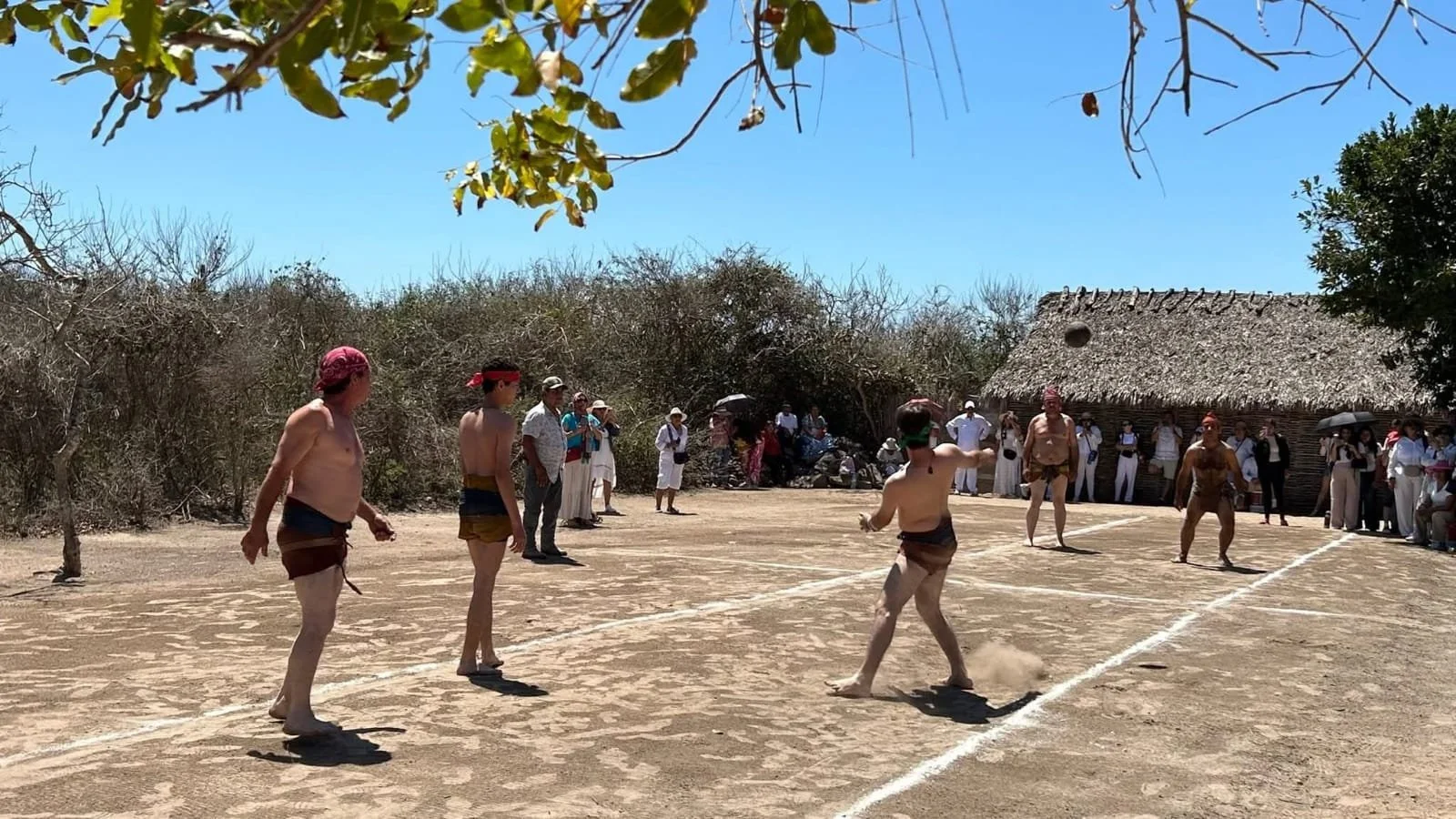
Photo from Jose Lizarraga
The Three Surviving Forms of Ulama
Ulama de cadera (hip), mazo (mallet), and brazo (arm) survived in Sinaloa. Ulama de cadera (hip) is played by striking a solid rubber ball with the hip or upper thigh. The ball can weigh around three to four kilograms, turning a return into a fullbody action. Pelota mixteca which survived in Oaxaca uses a smaller, lighter ball struck with the protected glove and weighs 6 to 7 kilograms. Juego de pelota Purépecha or Uárukua Ch’ankua which survived in Michoacán uses a wooden bat or mazo. Each developed its own local rules, scoring systems and traditions, reminding us that “the Mesoamerican ballgame” was always a family of games rather than a single fixed -sport.
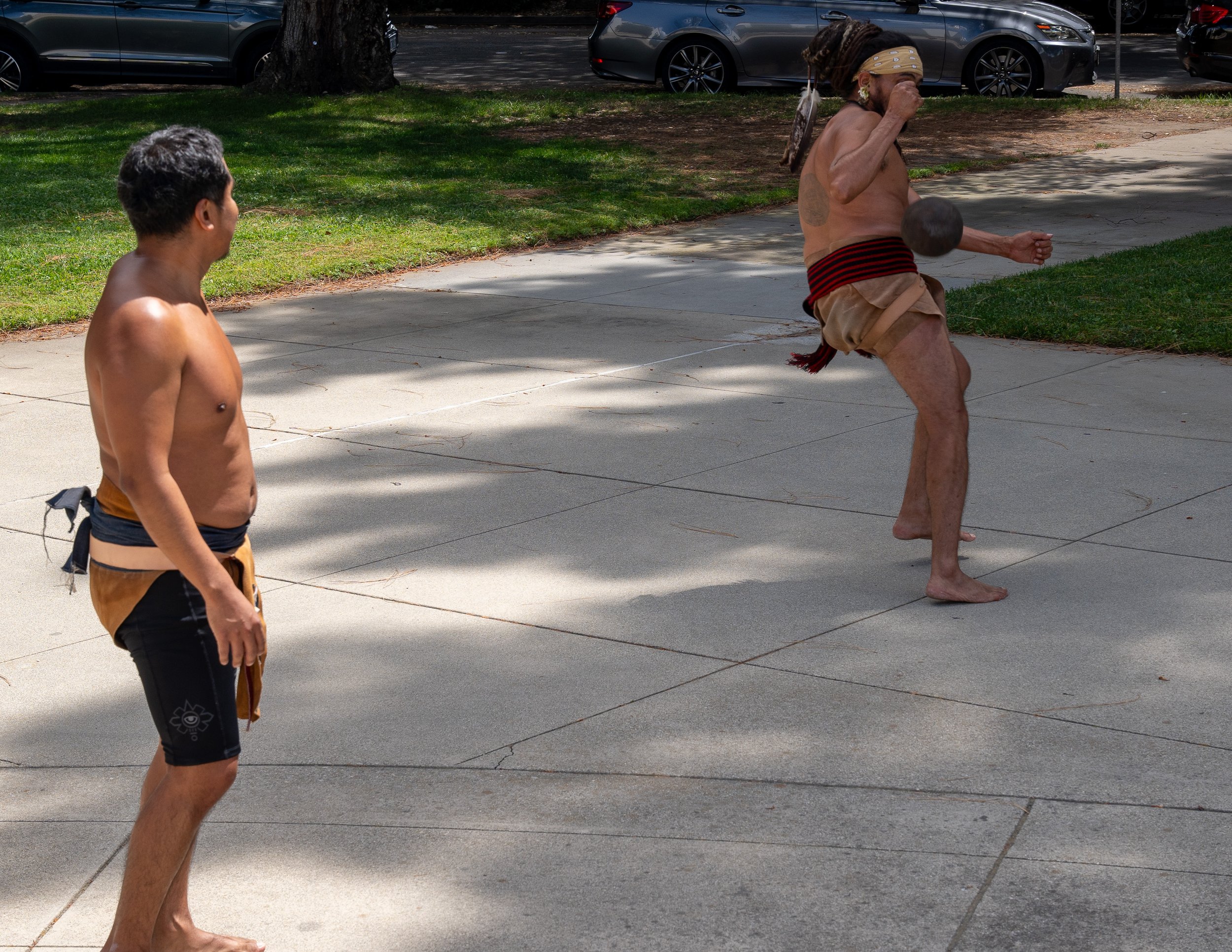
Weha Kiskeh team playing the cadera form of ulama
How Ulama Is Played Today
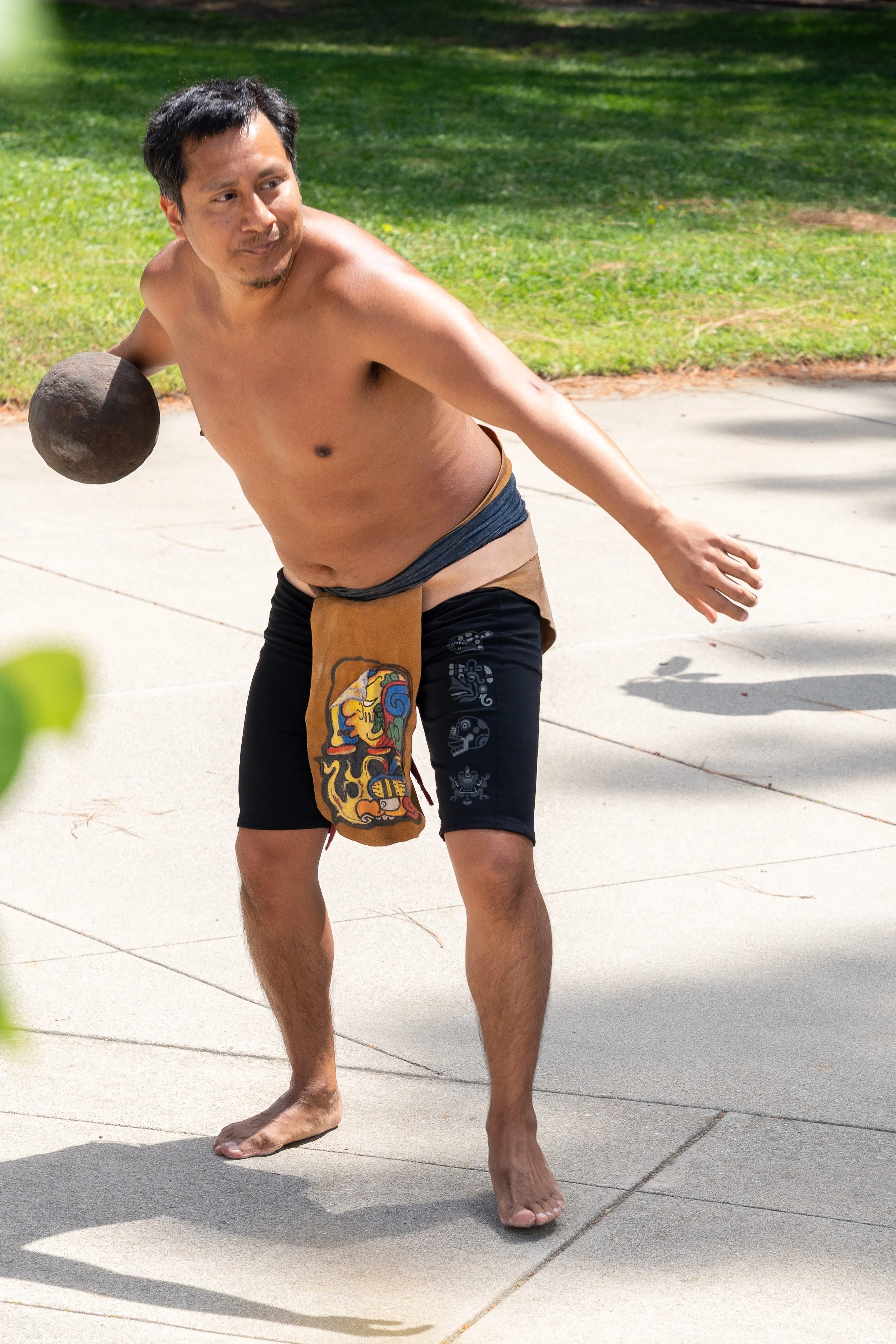
According to Jose, the hip-based variant of ulama is played on a court known as a “taste”, measuring 50 meters long by 3.5 meters wide and divided by a center line called “Analco”, a term that translates to "on the other side of the river" or "at the river's edge."
Teams consist of five or six players each; while the players themselves conduct the match, the “veedor” (umpire) holds ultimate authority. He intervenes whenever a dispute arises regarding a contested play, simply declaring which team is awarded the point in question; a ruling that is final and not open to further argument. The winning team is the one that manages to accumulate eight points. Achieving this is no simple task, however, as the game includes a subtraction rule: at certain stages, if one team catches up to the other, the trailing team's accumulated score may be wiped out and reset to zero, ensuring there are no ties in this format.
The Current Courts in Sinaloa
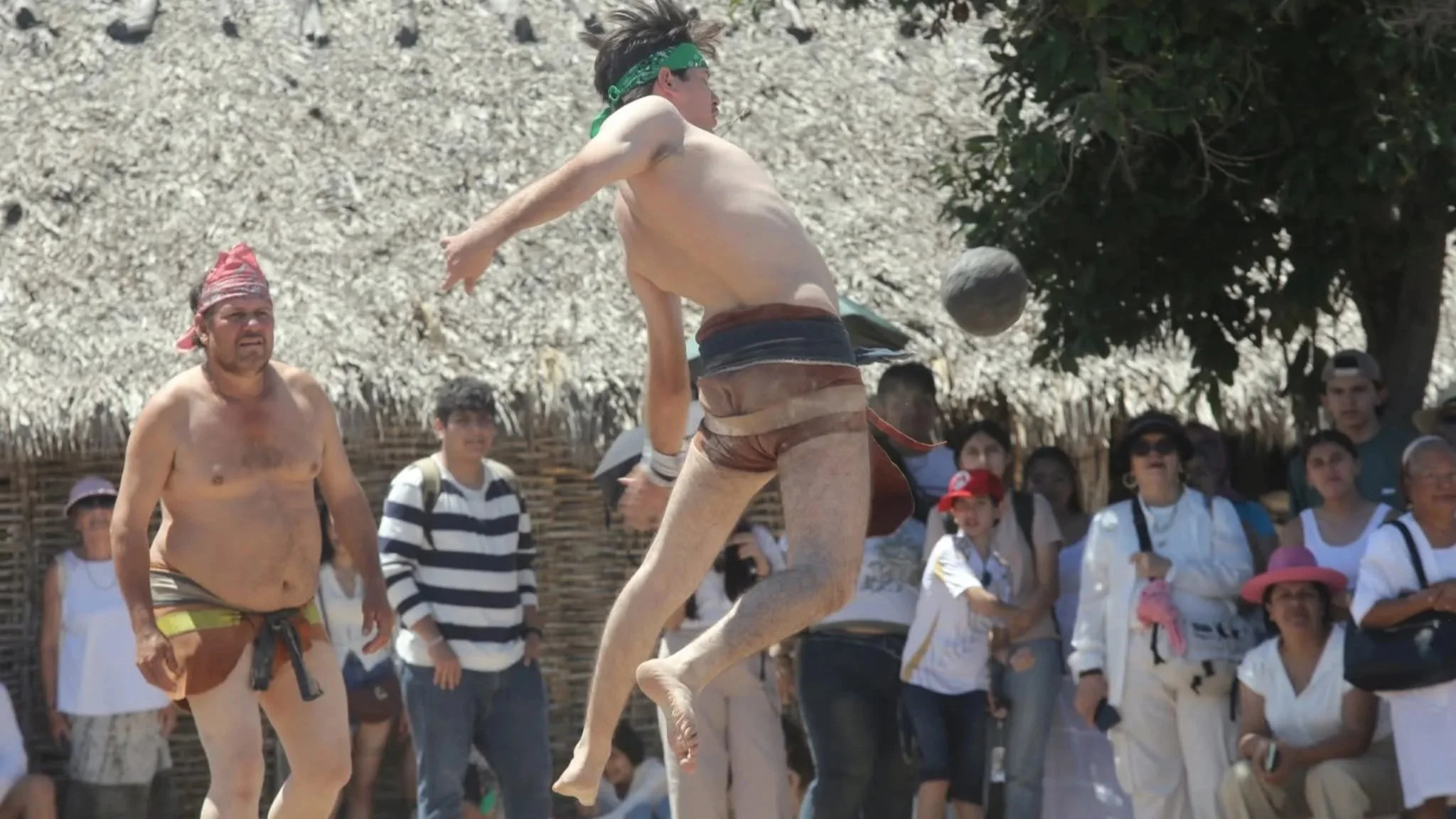
According to Jose, current playing fields for the cadera (hip-game) vary in Sinaloa.There are currently three tastes (playing courts) located in the municipality of Mazatlán:
The first is in the community of La Mora Escarbada, within the El Quelite sindicatura (administrative district).
The second is in the community of La Sábila, the "Chaute" taste also within the El Quelite sindicatura.
The third is the Miguel Ángel Lizárraga Arellano taste, located in the community of Los Llanitos within the Mármol sindicatura.
Although this cadera variant is also played in Escuinapa, there is no permanent taste there; instead, the game is played on a soccer field where the court is marked out for training sessions or matches. These courts are maintained by the players themselves, and it is their effort and dedication that keep the tastes and the game alive.
The Families Who Kept the Game Alive
Although the practice was once widespread across various communities starting in the 1980s, it is now kept alive primarily by specific families in communities within the municipality of Mazatlán.
These include the Lizarraga Covarrubias family in La Mora Escarbada and La Sábila; the Osuna Machado and Lizarraga Osuna families in Los Cedros and Los Llanitos; the Páez family in Los Llanitos; the Osuna Bonilla family in El Chamisal; and the Huayra López and Huayra Ríos families in Escuinapa.
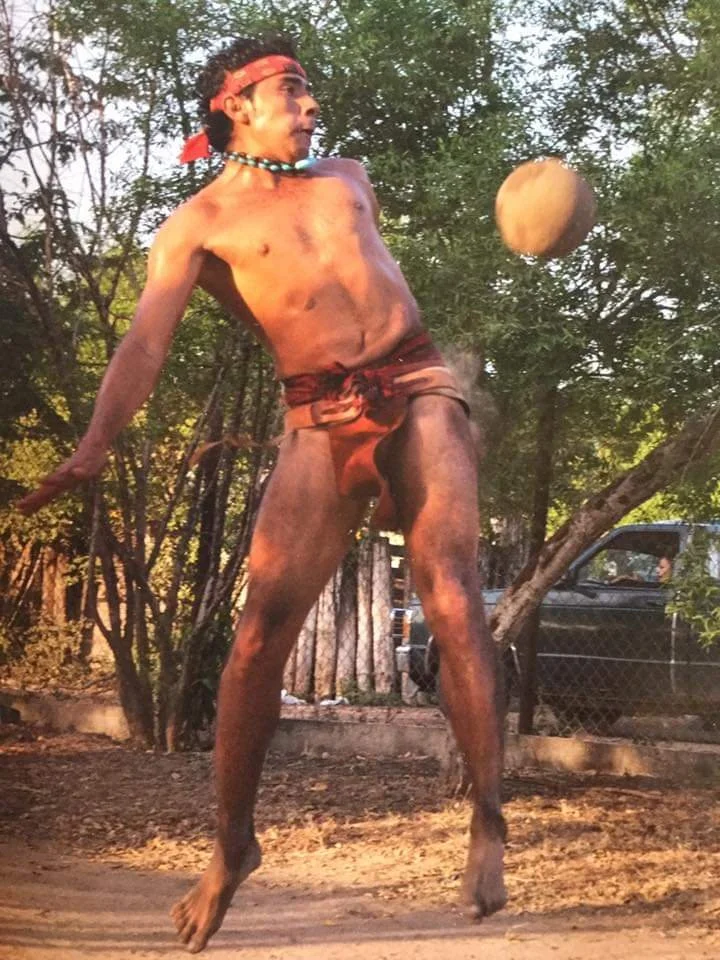
The Lizarraga Covarrubias family is perhaps the most deeply connected to this generational tradition. Originating in the community of La Mora Escarbada, they played a pivotal role in introducing the practice to the south of the country in the 1990s. For the past eleven years, a member of the family has served as a coach and co-founder of teams across more than twelve Mexican states and has conducted training sessions for teams in Belize and California. He is the president of the Federación Mexicana Deportiva y Tradicional de Ulama de Cadera A.C. (FEMUC) and a leading artisan in the crafting of the rubber balls used for the sport; an estimated 300 of his balls are currently in use across Mexico and at least five other countries.
It is also important to acknowledge other communities that kept the game alive until relatively recently, such as El Quelite, El Quemado, El Habal, La Noria, Puerta de Canoas, La Palma Sola, El Chilillo, Villa Unión, El Verde (Concordia), and El Walamo, to name a few. The sheer number of places, towns, and municipalities that have contributed to the practice of ulama in Sinaloa over time is truly impressive.
Jose Lizárraga
Weha Kiskeh
Weha Kiskeh is the only team in the United States associated with Mexico’s ulama league through the Lizárraga family tradition. Its name means “those who traveled far away,” a fitting description for a team made up of members from different parts of Mexico who now live in Los Angeles. Their approach to the game follows the form of ulama passed down through the Lizárraga family, with an emphasis on technique, disciplined training and the continued development of the sport itself. The team regularly travels to Mexico to compete alongside other teams within the Lizárraga lineage, carrying the game between Sinaloa and Los Angeles and extending a living tradition beyond its original courts.
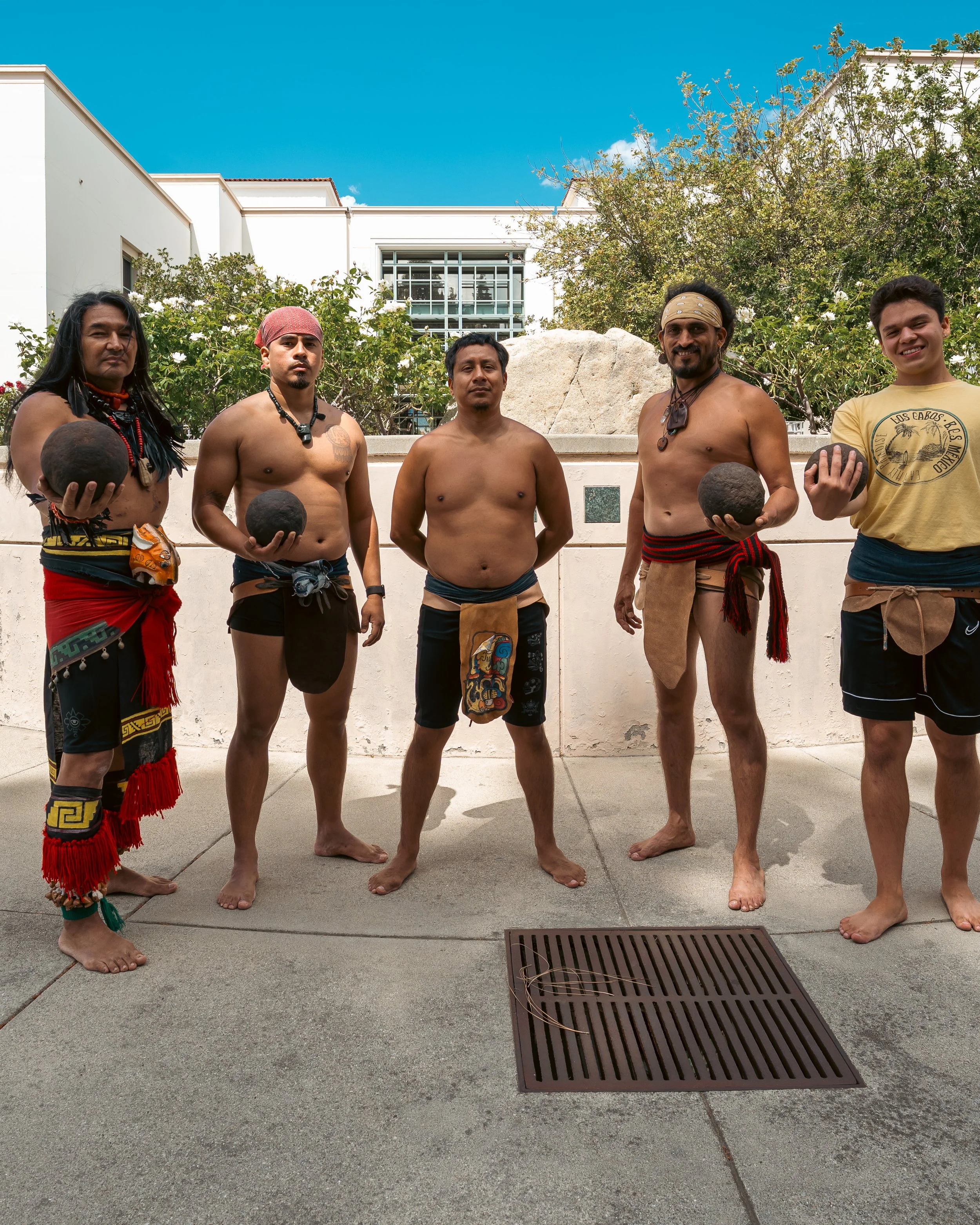
Some of the Weha Kiskeh players who taught students an introduction to ulama at the Azteca-Mexica heritage event in April 2026 at The Claremont Colleges
A Tradition Still in Play
This matters because ulama is not simply an ancient game reconstructed from stone reliefs. It is knowledge held in the body: how to receive the weight of the ball, how to read its bounce, how to wrap the hips, how to argue a point, how to teach the next player.
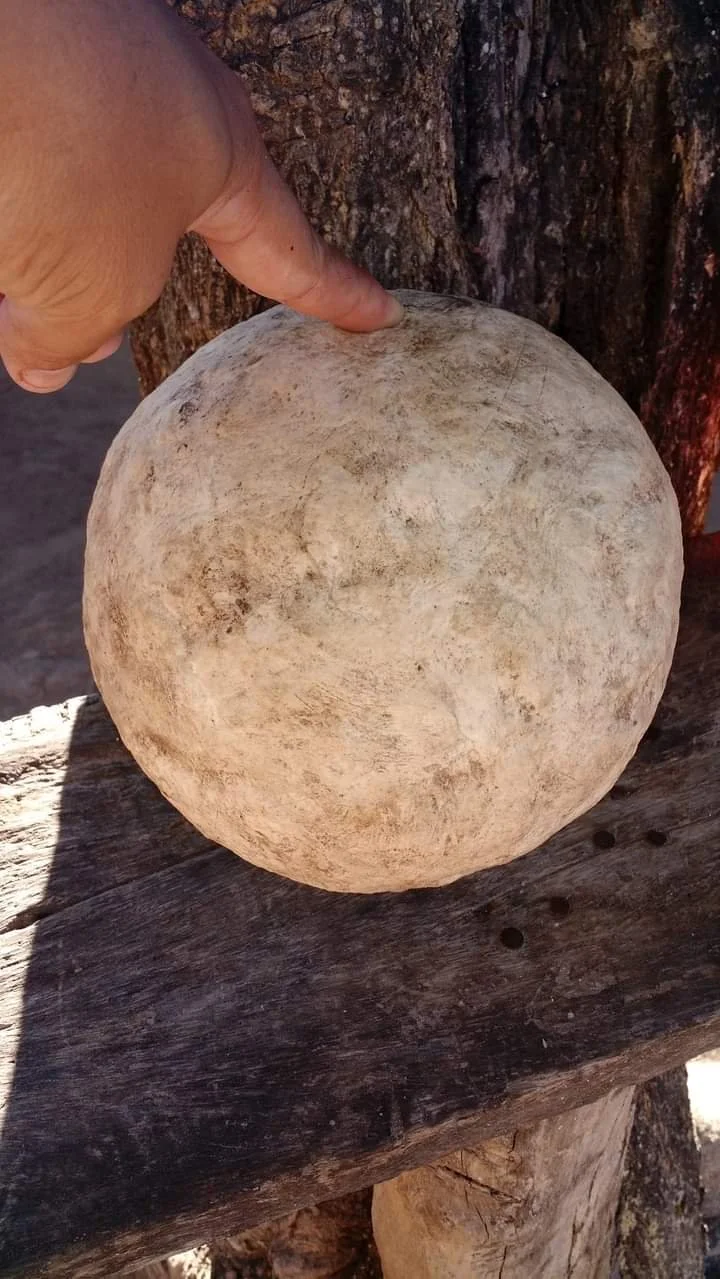
An example of the rubber ball which is made in the traditional method by the Lizárraga family
Archaeology can show us the courts. Codices and sculpture can show us the players. In Sinaloa, the game shows us something else the possibility that a tradition can survive because people continue to put it into motion.
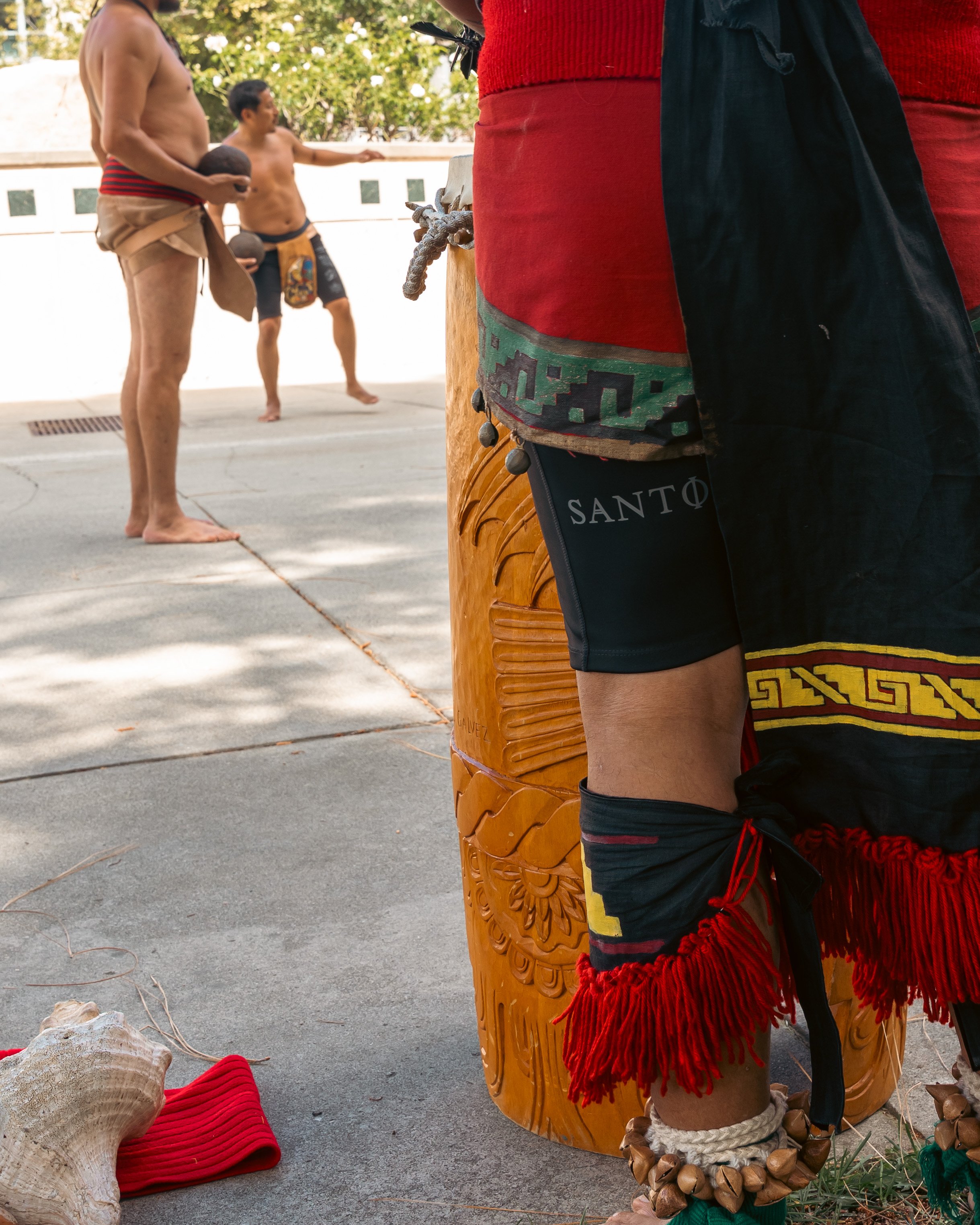
According to Jose, ulama has endured in these communities through intergenerational transmission, with families passing the tradition down from parents to children. They occasionally arrange for their teams to face off against others in neighboring communities. Events that turn into festive occasions for family bonding and draw spectators from other towns, fostering a true sense of community where everyone joins in the celebration. Matches typically last three hours or more, and players continue to use the traditional scoring system inherited from their grandparents. In doing so, they keep alive the knowledge surrounding hip-ulama from maintaining the courts and the practice itself to upholding the rules and, most importantly, preserving the respect and passion for the game that gives their towns a unique identity in the eyes of the world.
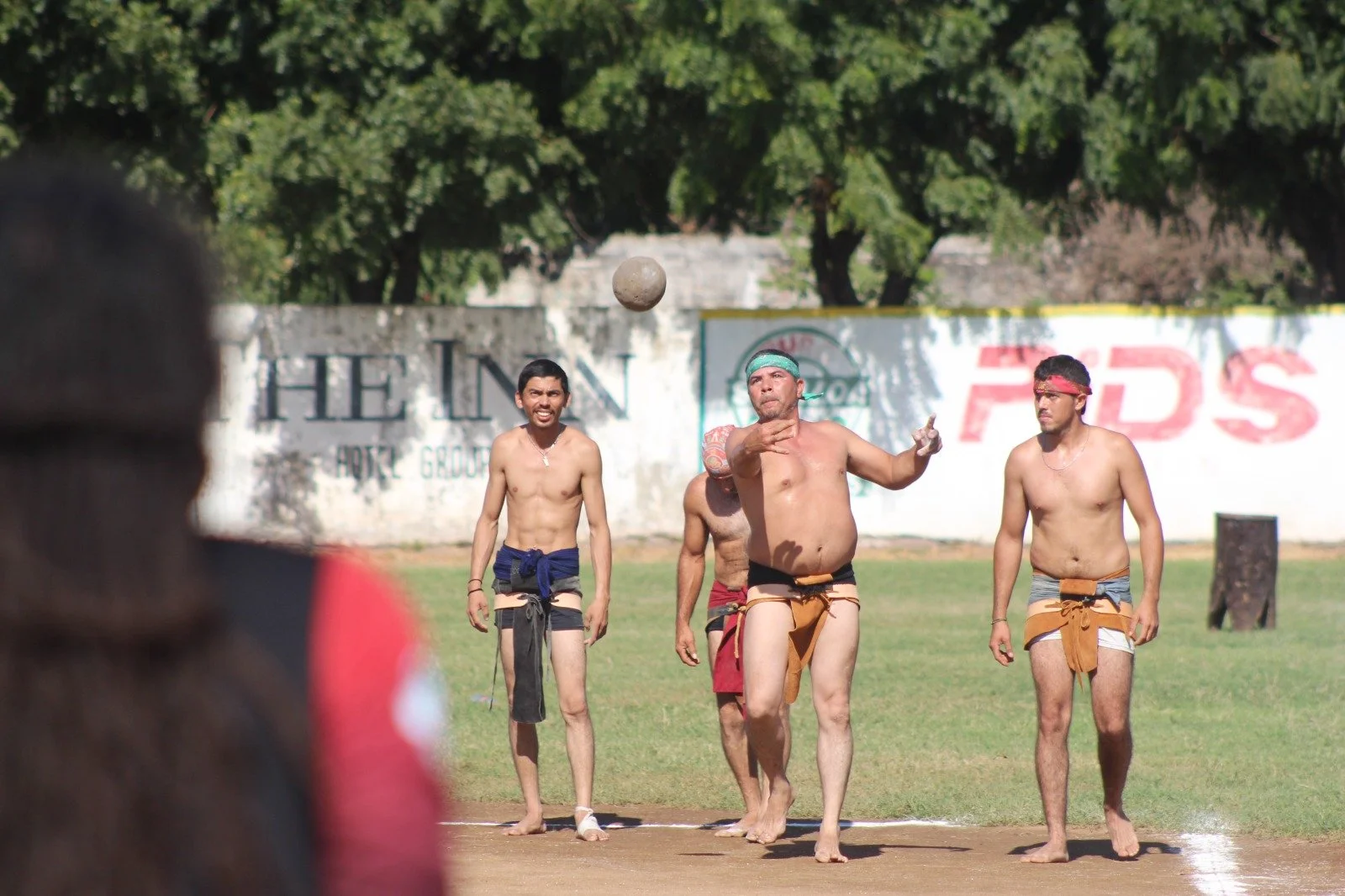
Written By Esteban Galvez. Special thanks to Jose Lizzaraga and Eduardo Martinez for their expertise and collaboration on this journal entry.