Azteca-Mexica Heritage at The Claremont Colleges
Ollin at Claremont: Movement, Memory, and the Living Ballgame
Before ollin was explained, it was heard.
A sonaja shook in the room at The Claremont Colleges, its rhythm opening the gathering before the idea had fully entered language. On April 11, 2026, Santo-Fi hosted Aztec-Mexica Heritage Day, an afternoon led by Maestro Javier Galvez, educator, leader of Los Danzntes del Sol, and longtime teacher of Azteca-Mexica culture and traditions at The Claremont Colleges and Claremont Graduate School. His father (Ricardo Galvez) founded of Los Danzantes del Sol in 1917 - a Matlachines dance troupe who has been vital to keeping the ancestral dances of Mexico alive in North America.
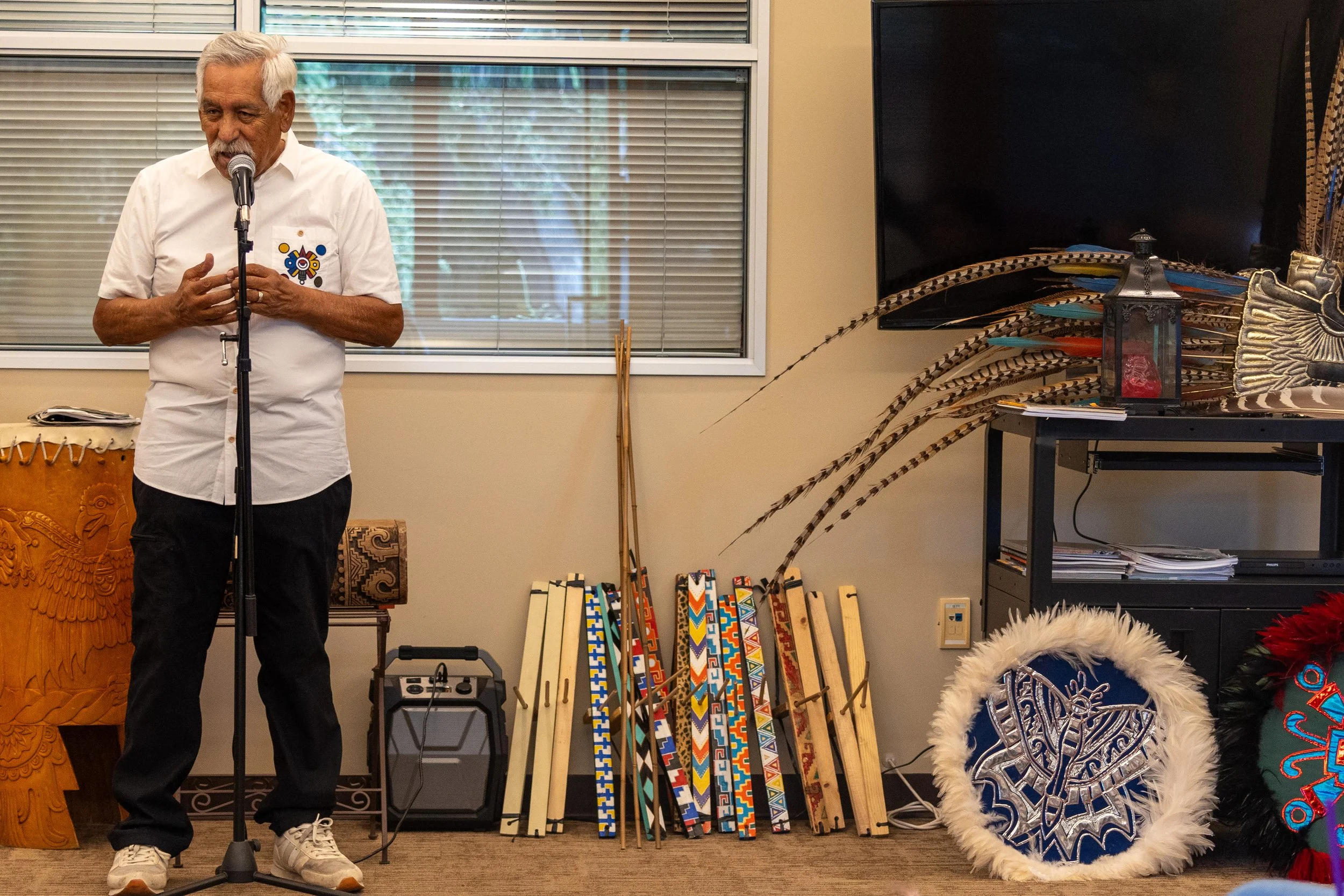
Javier began with history: the migration traditions of the Mexica, the movement toward the Valley of Mexico, and the eventual founding of Tenochtitlan, the island city that would become the center of Mexica political, ceremonial, and cultural life. The story was not presented as distant material. It was carried into the room as something still asking to be understood through the body.
From there, Javier moved toward the word that held the afternoon together: Ollin. Often translated from Nahuatl as movement, Ollin speaks to more than motion in a simple physical sense. It is also translated as Nahui Ollin - 4 directional movements. Within the gathering, it became a way to think about life as something unstable, demanding, and alive… A condition shaped by struggle, transformation, rhythm, responsibility, and renewal.
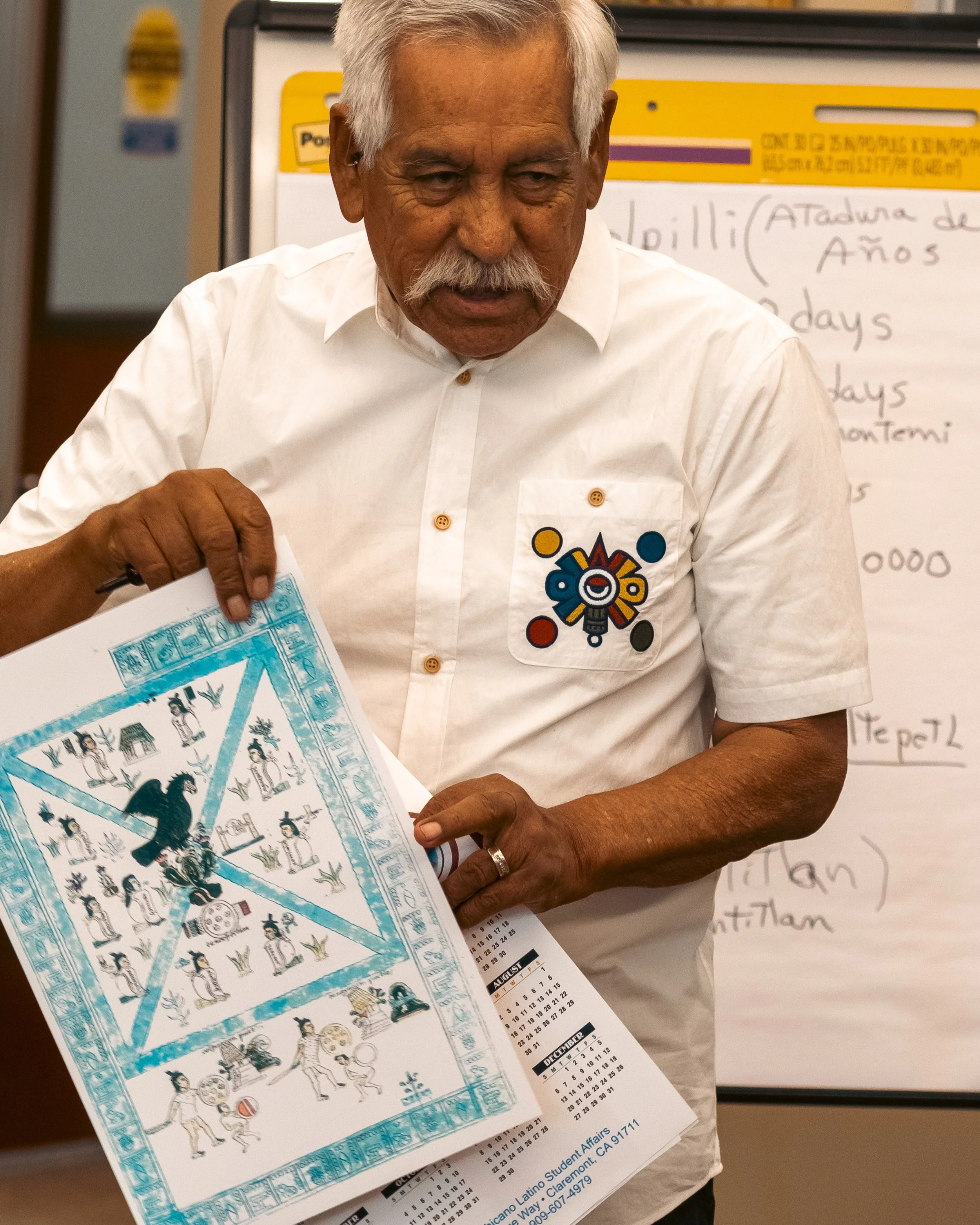
Javier Galvez explaining Ollin
To live well, in this framing, is not to only hear about movement. It is to participate consciously in it.
That idea became clearer when the lecture gave way to music. Javier introduced the students to Matlachines, a living ritual dance tradition shaped through colonial era encounter, Catholic devotion, Indigenous presence, and regional Mexican practice. Its relationship to Azteca-Mexica dance is not a straight line or a simple survival story. It is more layered than that: historical, symbolic, devotional, and embodied.
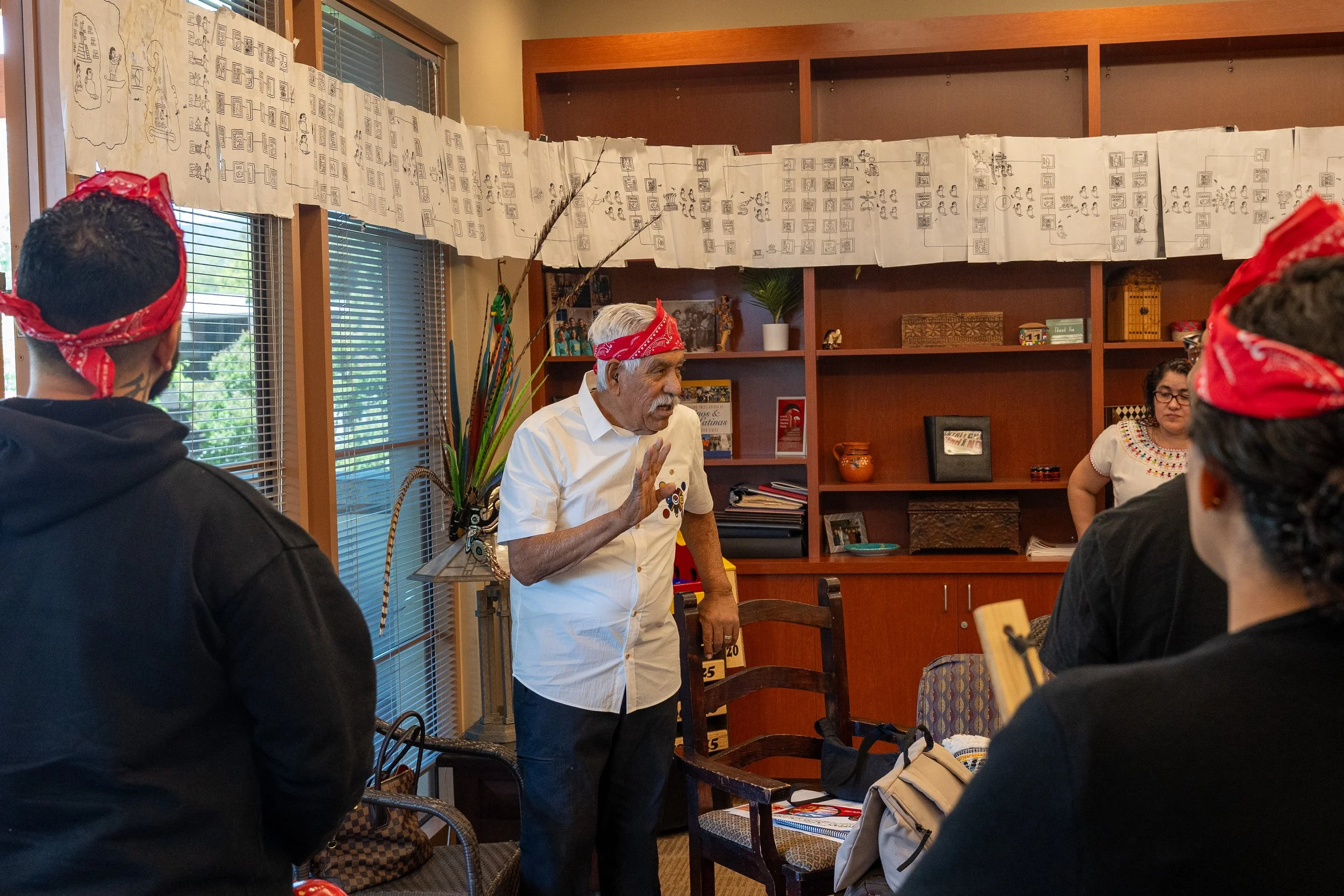
The students learned the fundamental steps with a stylized bow and arrow in hand, while sonajas marked the pulse of the drum. One - Two - Three - Four. This was the central timing for the entire dance. A timing indicative of Ollin…At first, the room carried the quiet hesitation that often comes when people are asked to learn with their bodies rather than simply listen with their minds. Then the rhythm began to organize them. Feet found the beat. Hands adjusted to the weight of the objects. The bow and arrow evoked hunting and warrior imagery, but within the dance they also became instruments of timing and focus.
What had started as a lecture became a form of attention and unison.
After the dance, Javier introduced his former student, Eduardo Martinez, who entered wearing Azteca regalia. Featherwork, beadwork, and embroidered detail gave the next part of the gathering a different visual presence. Contemporary Azteca regalia is often organized around the body in layers: the penacho or feathered headdress frames the head, while the chest is marked by a pechera or pectoral piece carrying color, beadwork, embroidery, or symbolic design. Around the waist, dancers may wear a maaztlatl, tanganillo, skirt, or other covering, depending on the dancer, group, gender, and ceremonial context. Details such as wrist pieces, ankle rattles known as ayoyotes, and hand-held instruments extend the regalia into movement, allowing sound, rhythm, and visual form to work together as the dancer moves.
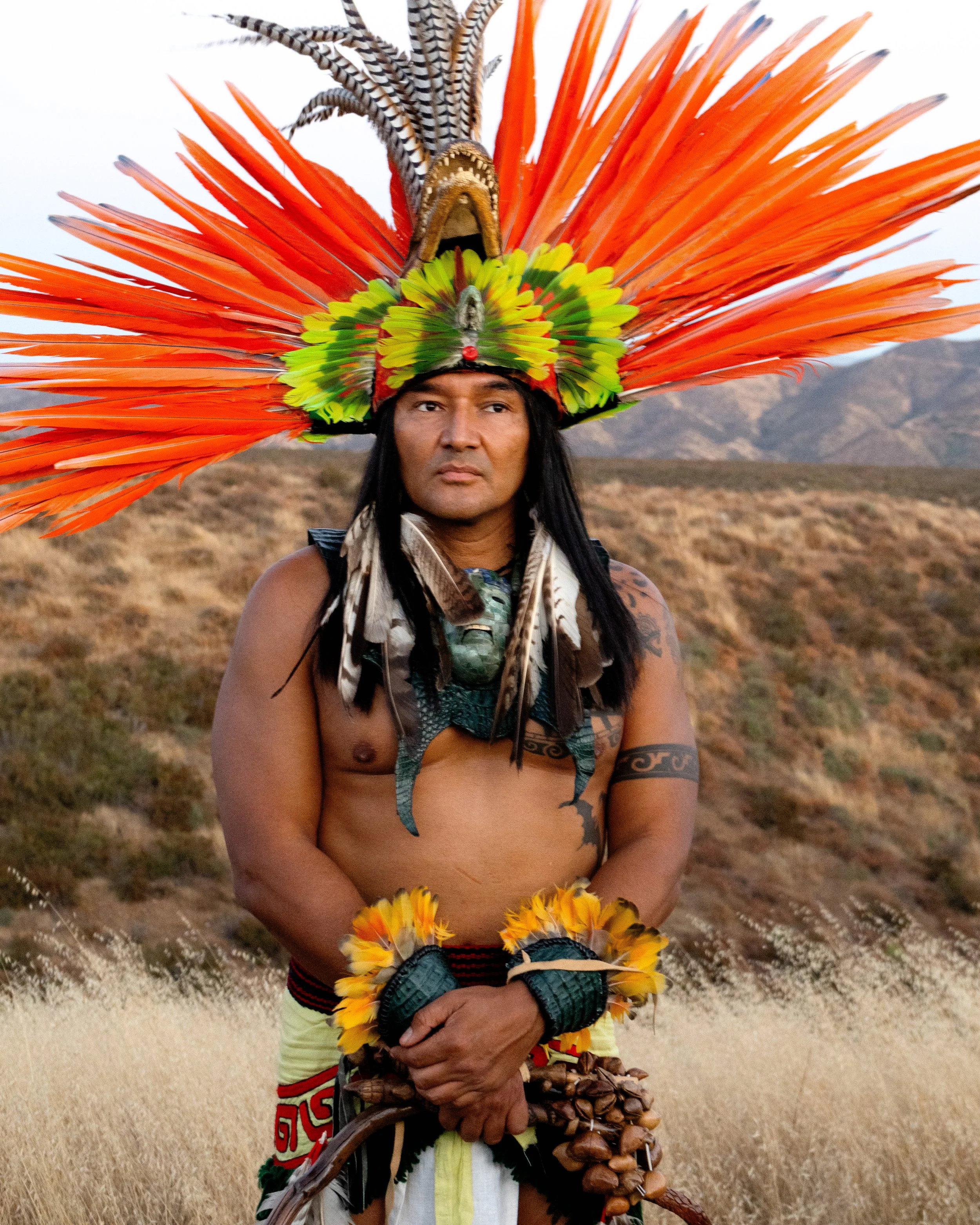
Eduardo spoke briefly in Nahuatl, taught a few words to the students, and introduced the history of olama, the contemporary form of a much older Mesoamerican rubber-ball tradition. Olama is often discussed in relation to ōllamaliztli, the Nahua ballgame played across parts of Mesoamerica. In earlier forms, players struck a heavy rubber ball, often with the hips, while wearing protection around the body. The game could be public sport, elite competition, ritual performance, and social gathering. In Mexica contexts, it was connected to ideas of conflict, movement, fertility, and the cycles of life and death. Some ceremonial games were associated with sacrifice, though sacrifice was not part of every match.
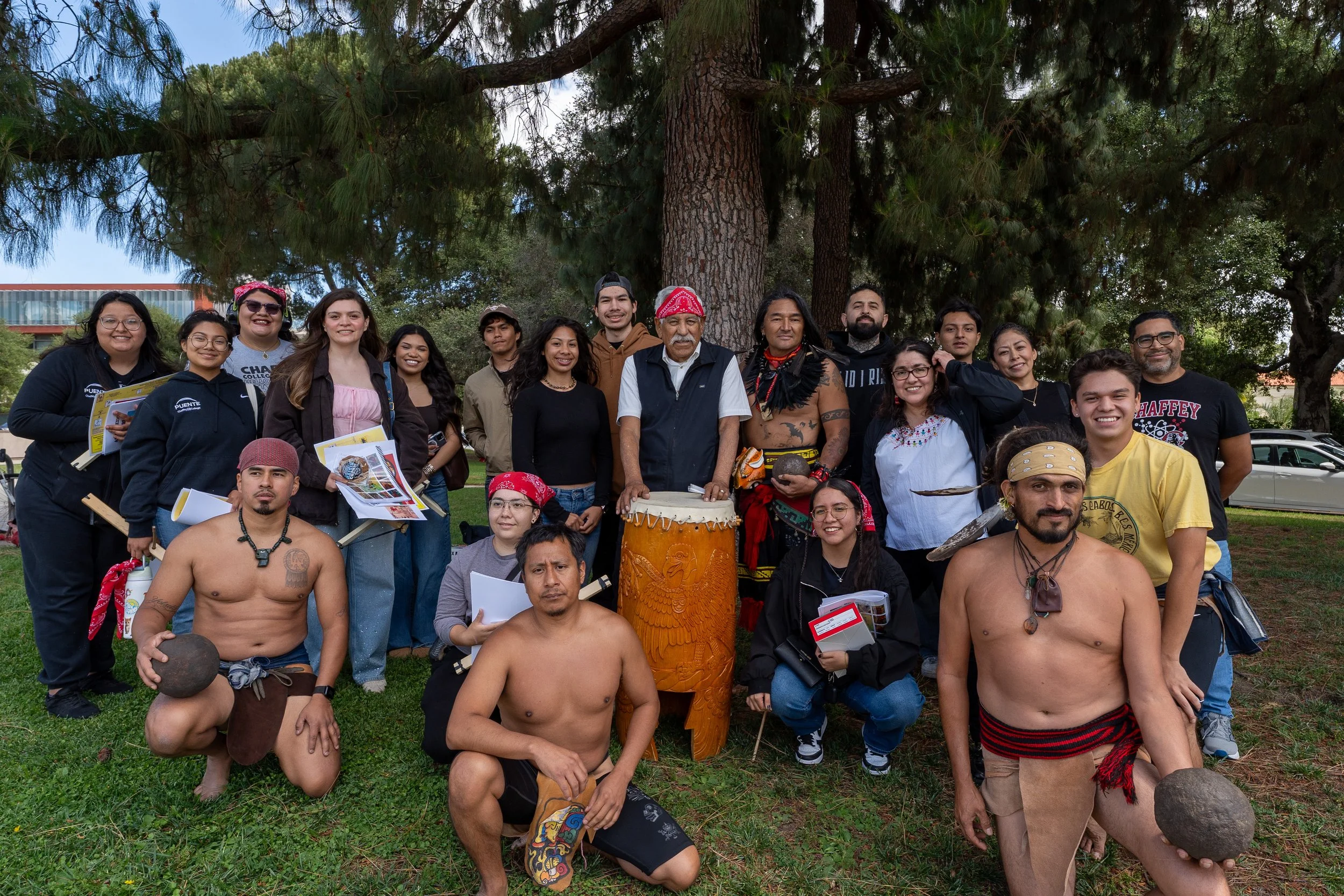
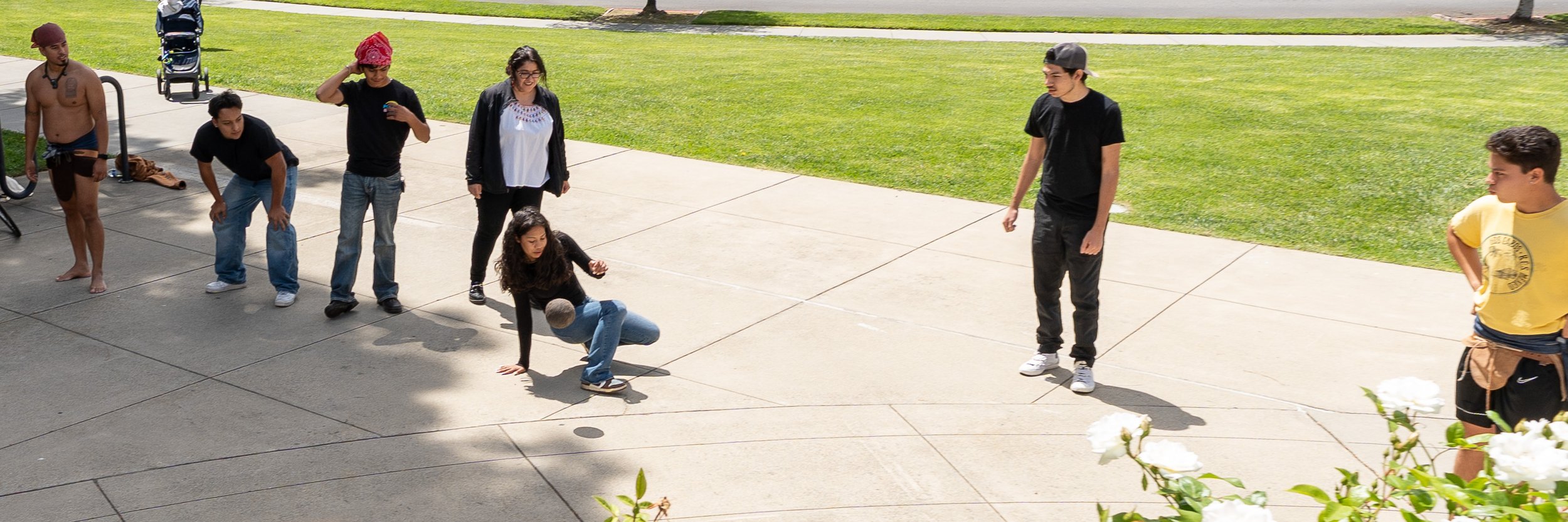
After Eduardo’s lecture, everyone moved outside, gathering in front of the Harvey Mudd library, where members of Weha Kiskeh led the group through olama. Weha Kiskeh, the Southern California olama team Eduardo belongs to, carries a name meaning “those who have returned.” On the grass, the meaning felt less like a title and more like a practice.
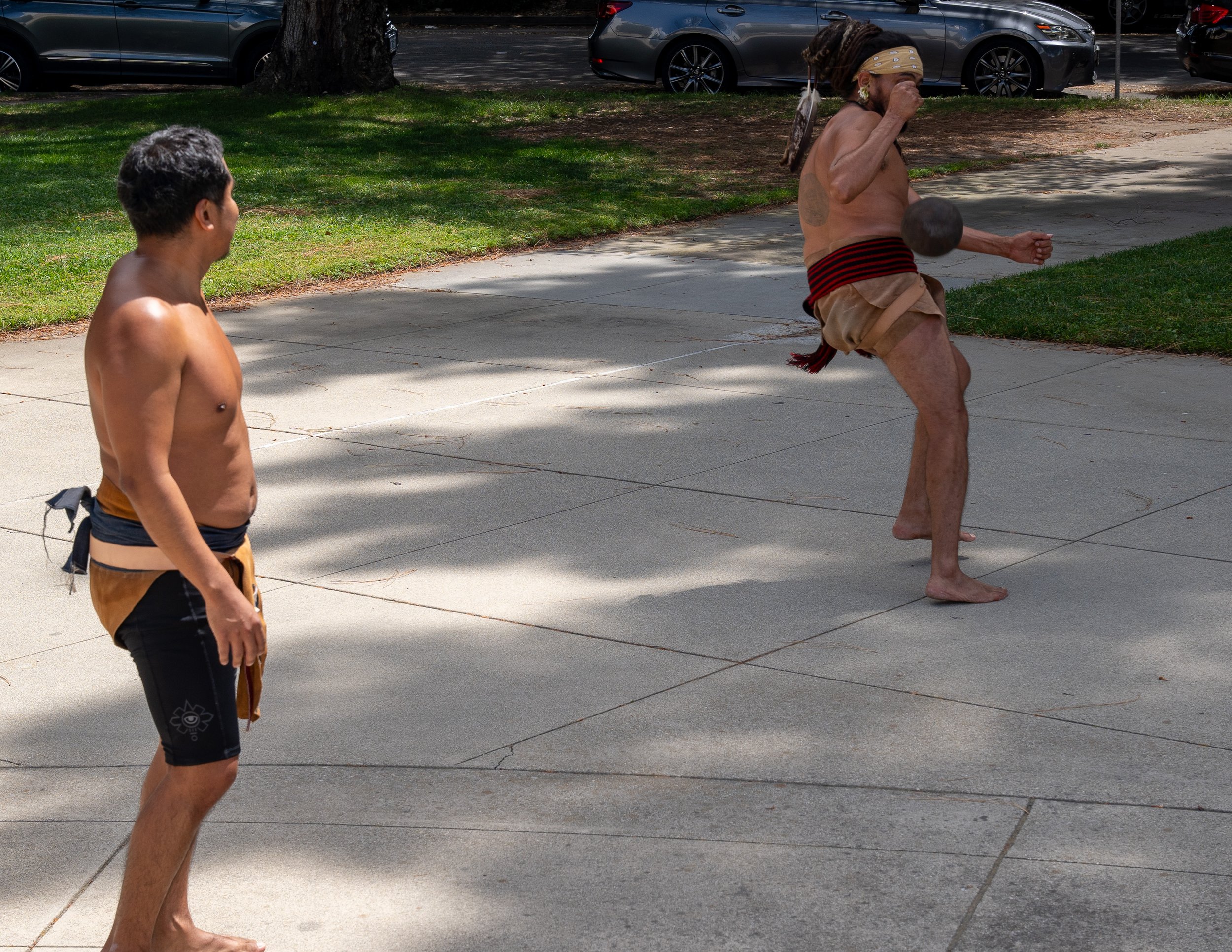
The ball changed the atmosphere immediately. It did not move like an idea on a page. It arrived with force. It asked for timing, commitment, and contact. Students watched, tried, missed, adjusted, laughed, and returned to the movement again. The body had to learn what the mind had just heard: that movement is not always graceful at first. It can be awkward, demanding, and difficult before it becomes fluid.
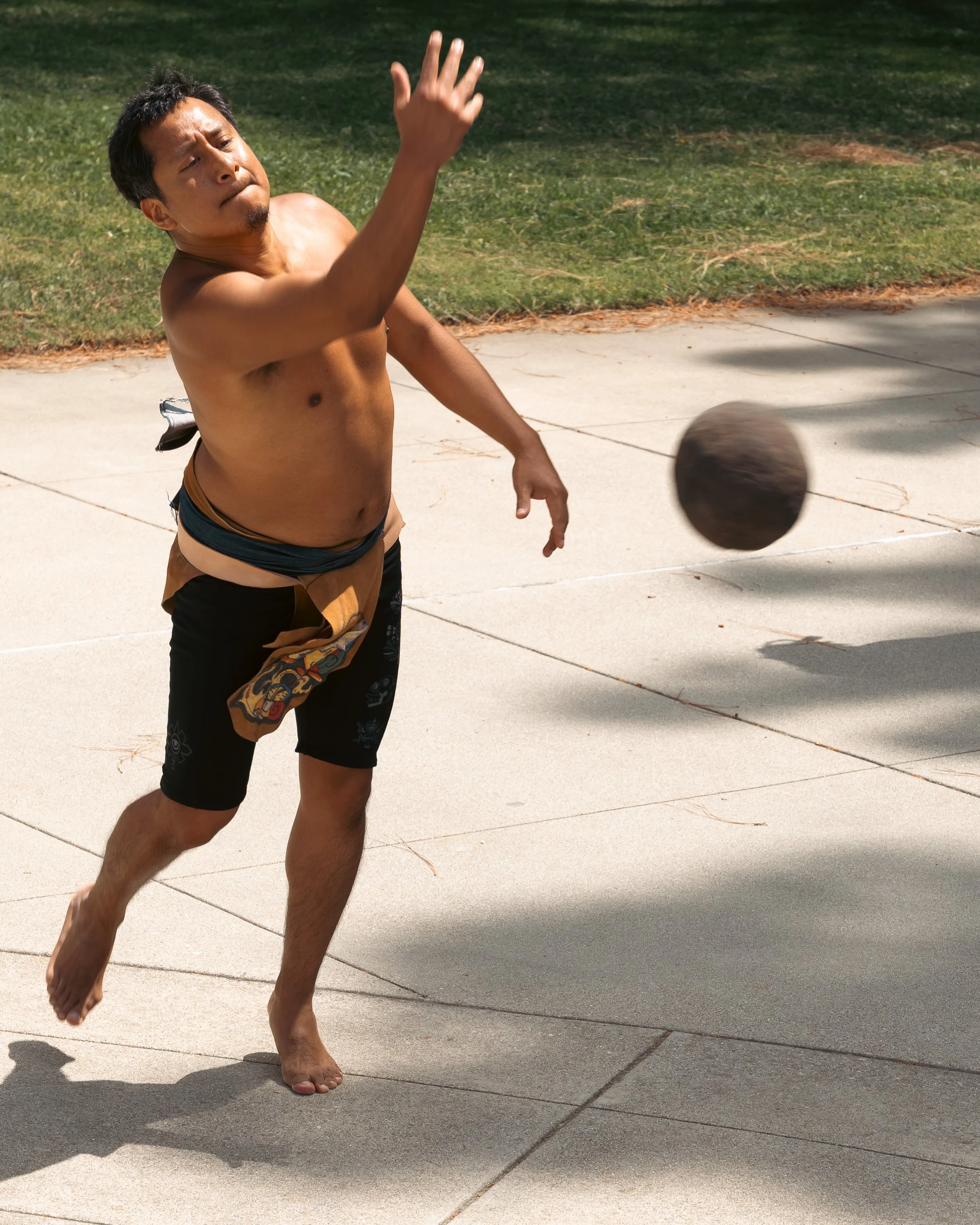
The challenge of hitting the ball correctly made those few times all the more sweeter.
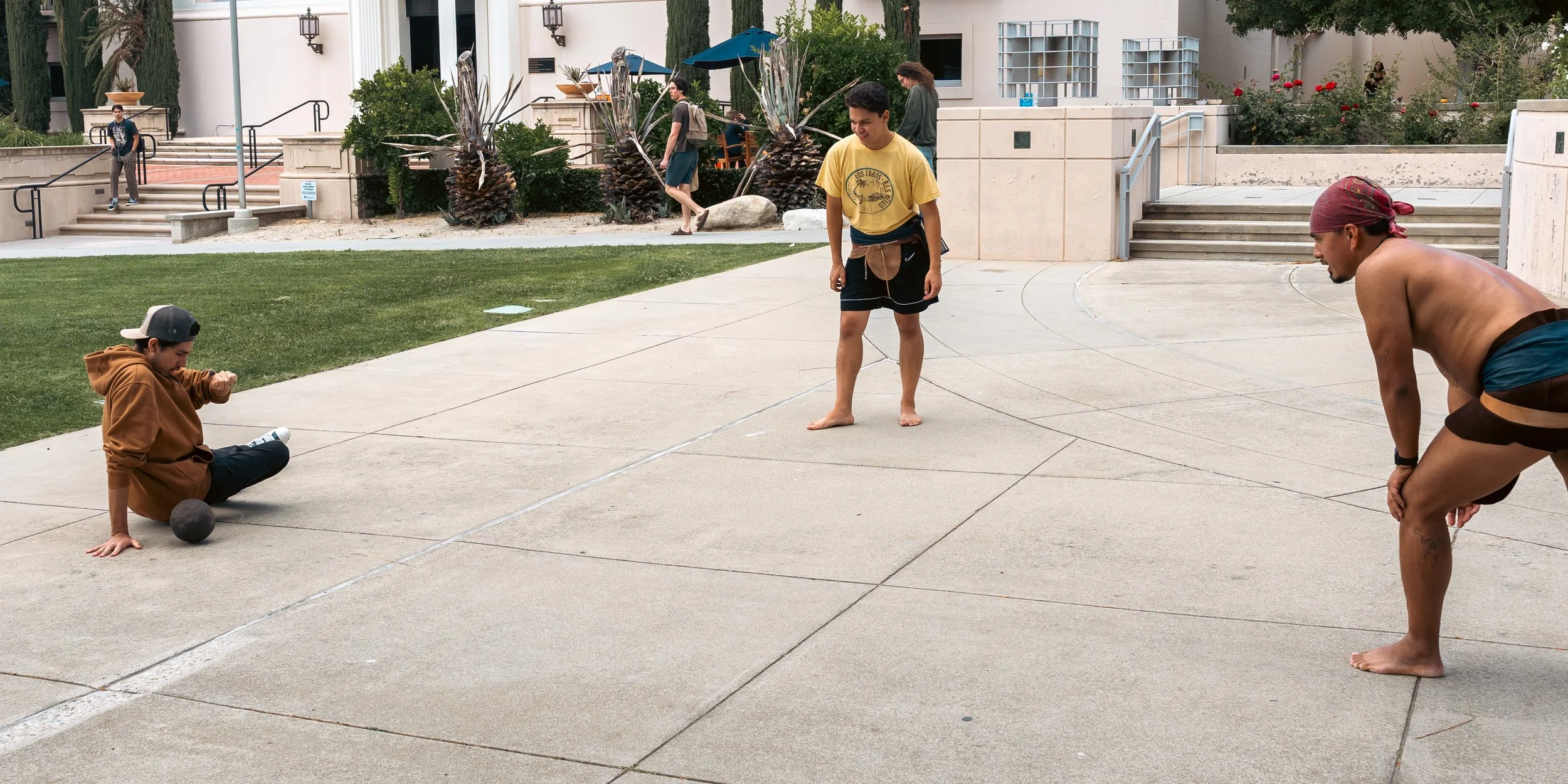
Morgan Smith (an attendee) learning from the Weha Kiskeh team how to hit the ‘hule’ or ball.
In front of one of the country’s most respected academic institutions, olama placed another form of knowledge beside the university: knowledge carried through tradition, music, dance, memory, impact, and play. The moment did not need to force a comparison between past and present. The comparison was already there — a library behind the students, a rubber ball in motion, a tradition being taught not as a museum object, but as something still practiced.
The afternoon began with knowledge and ended with bodies in movement together.
For Santo-Fi, this was the deeper lesson of ollin. Movement is not only change. It is participation. It asks something of the person inside it. To study culture responsibly is not simply to admire what came before, but to listen carefully, learn with humility, and recognize the living people who continue to carry these practices forward.
By the end of the gathering, ollin was no longer only a word. It had passed through music, footwork, language, regalia, instruction, play, and effort.
It had moved through the students themselves.