
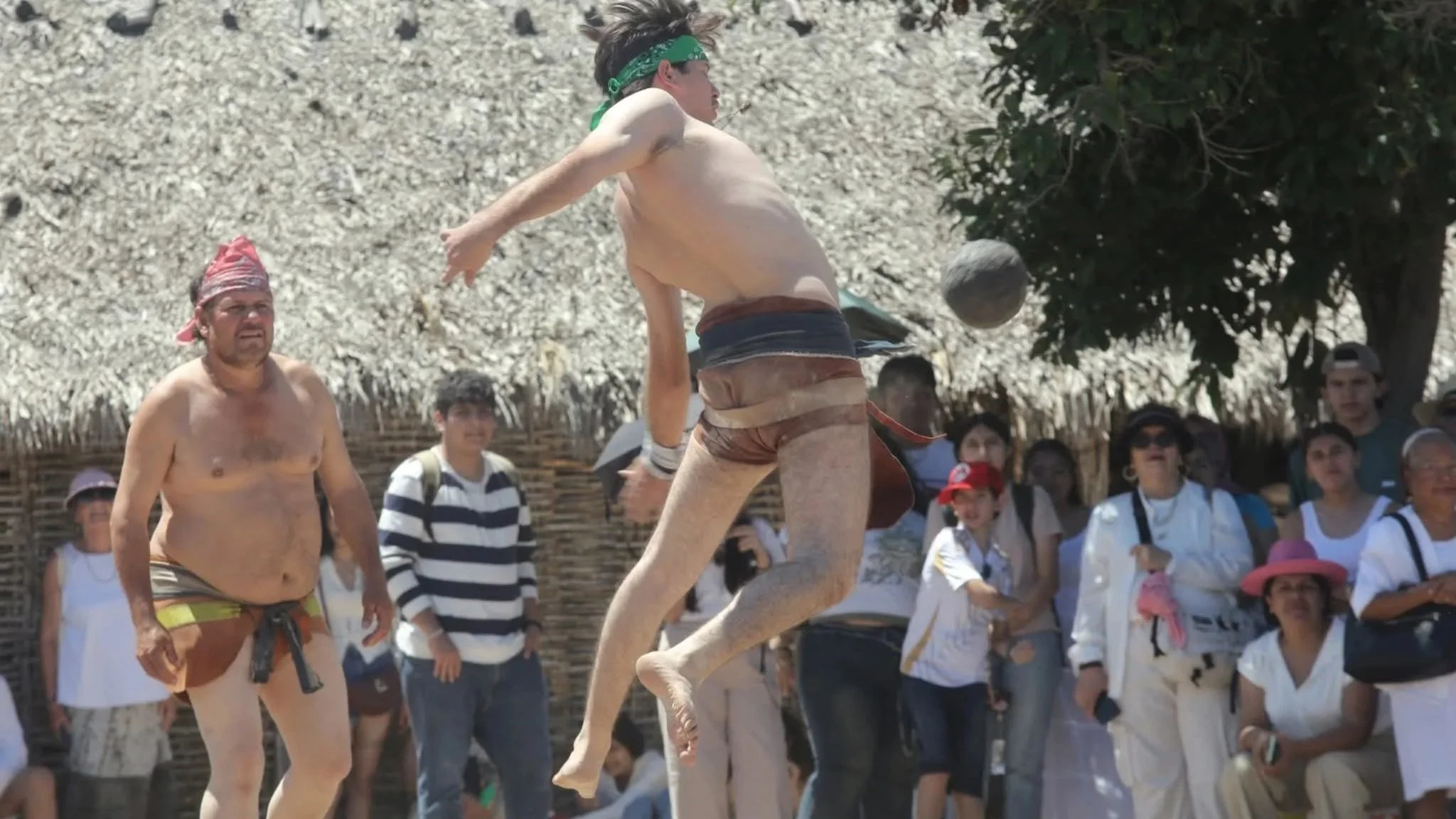
Ulama: A Ballgame Still in Motion
From ancient Mesoamerican ballcourts to the surviving tastes of Sinaloa, ulama endures as a living tradition carried forward through movement, family, and community.
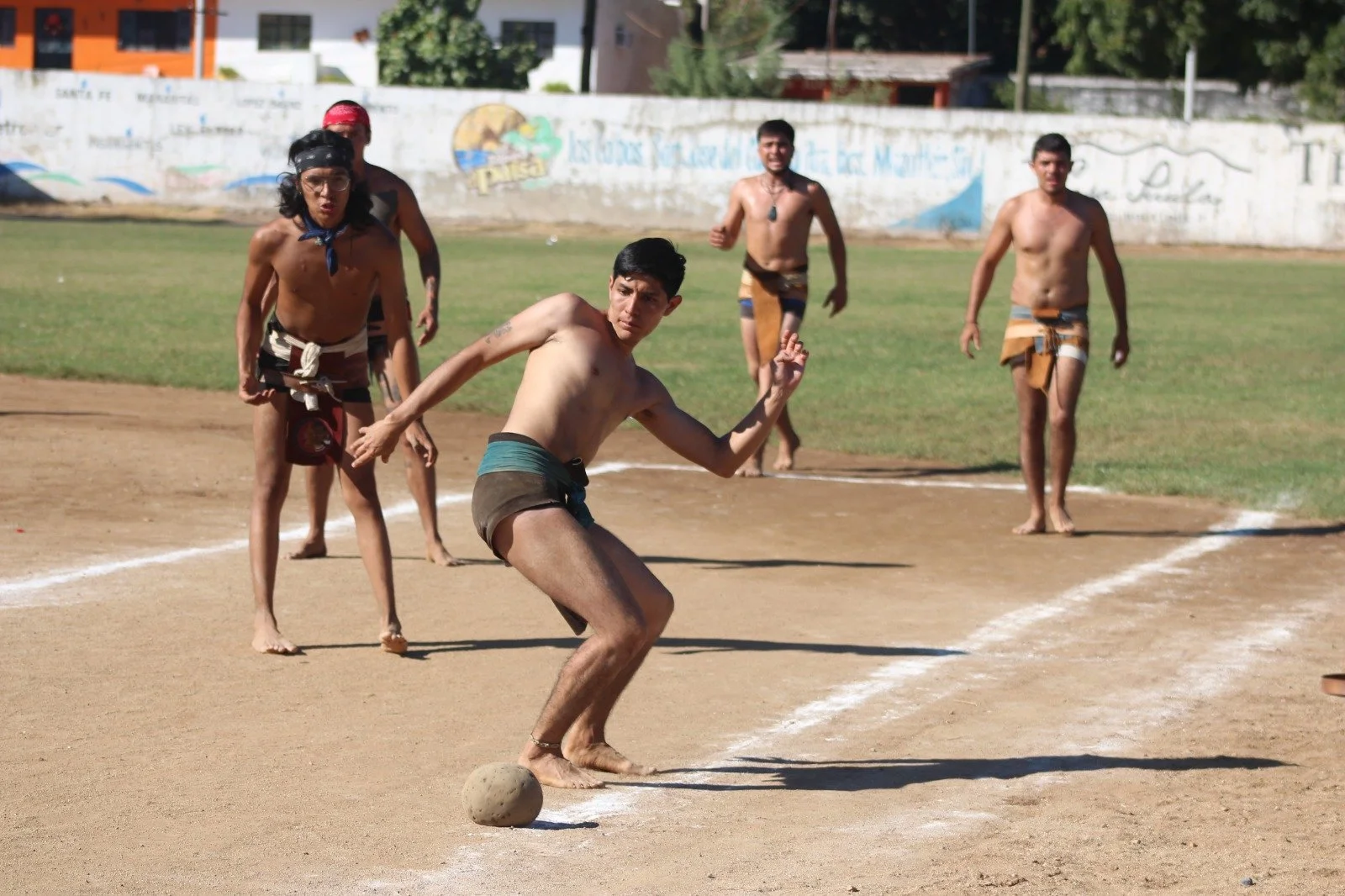
The Origins of the Mesoamerican Ballgame
Long before footballs were stitched from leather or basketballs filled with air, people in Mesoamerica learned to shape natural latex into a dense, elastic object that could be struck back and forth across a court. The exact birthplace of the game is still uncertain. Rubber balls recovered at El Manatí on Mexico’s Gulf Coast date to roughly 1600 BCE, while the earliest securely identified ballcourt at Paso de la Amada, Chiapas, dates to around 1400 BCE. Over the following three millennia, versions of the game spread across Mesoamerica, appearing among Olmec, Maya, Zapotec, Veracruz, Mixtec, Nahua and other societies.
There was never one single Mesoamerican ballgame. Courts changed, equipment changed and rules changed from place to place. Some players struck the ball with their hips or torso; elsewhere forearms or wooden implements were used. Certain later courts carried stone rings high on their walls, but sending the ball through a ring was not the universal purpose of the game. At its simplest, the central idea was movement: keep the heavy rubber ball alive and return it without using prohibited parts of the body.
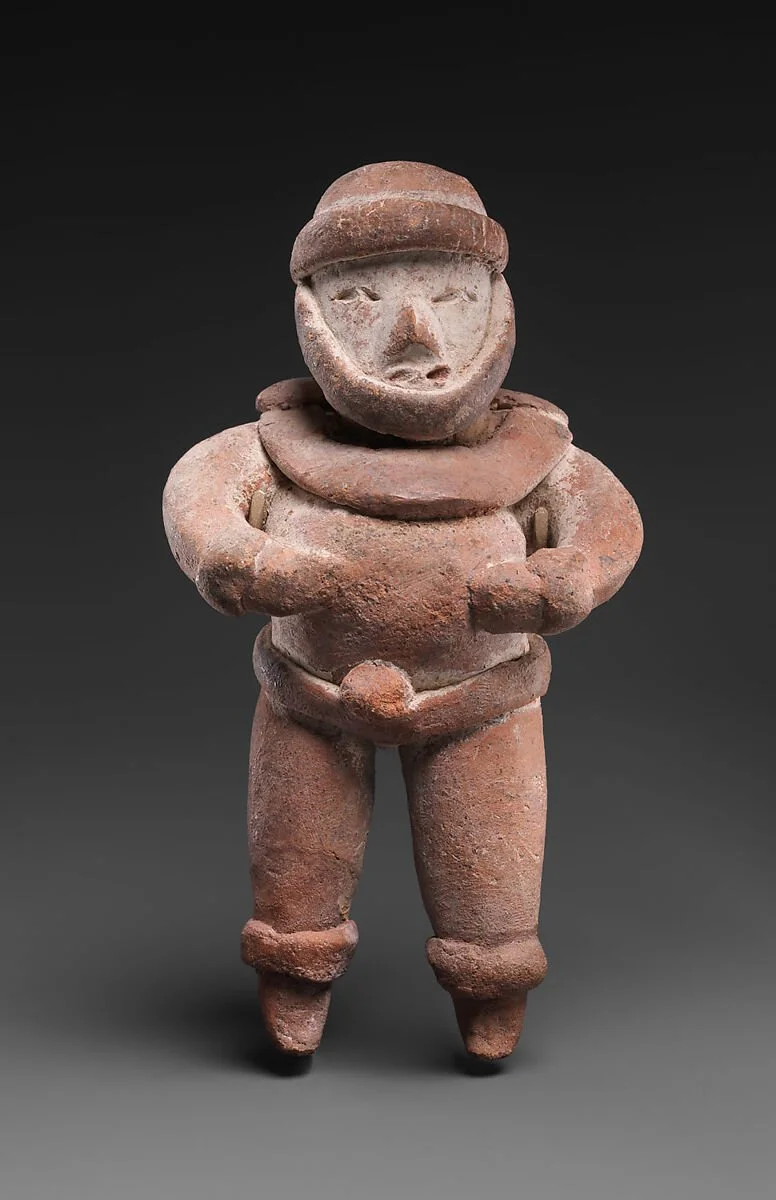
Ballplayer, Tlapacoya
1200–1000 BCE, Valley of Mexico
One of the earliest surviving representations of a Mesoamerican ballplayer. The raised arms, muscular body and distinctive stance give unusually early evidence for the game in Central Mexico.
Ollamaliztli in the Mexica World
By the height of Mexica power in the fifteenth and early sixteenth centuries, the game - known in Nahuatl as ollamaliztli was deeply established in the Central area of what is now Mexico. Spanish chroniclers described players trying to keep the ball continually in motion. The game could be entertainment, competition and a place for gambling, but it also carried meanings larger than sport. Across Mesoamerica, the ballcourt became connected to ideas of fertility, conflict, sacrifice, the underworld and the movement of celestial bodies. These meanings varied across cultures and periods; human sacrifice was associated with some ballgame rituals, but it should not be understood as the automatic conclusion of every match.
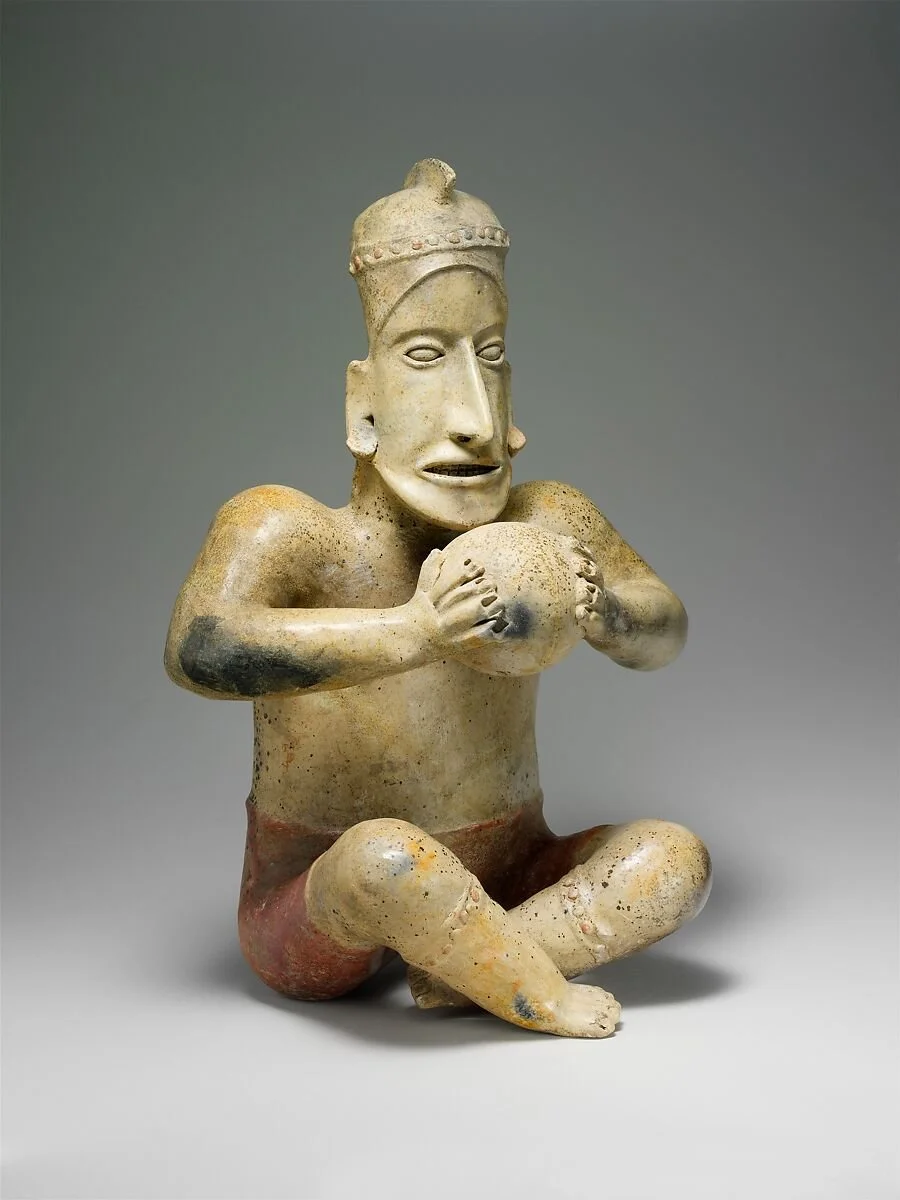
Seated Ballplayer, Ameca-Etzatlán
200 BCE–300 CE, Jalisco
Excellent reference for the ball itself, physique, loincloth, hair/headwear and player representation in western Mexico. Particularly relevant because modern ulama survives in western/northwestern Mexico.
Ulama’s Survival After the Conquest
After the Spanish conquest, the game declined sharply as colonial rule disrupted and suppressed many Indigenous ceremonial traditions. Yet it did not disappear. In communities of western Mexico, particularly Sinaloa, forms of the rubber-ball game continued to be taught. That survival is what we now call ulama. Jose Lizarraga is from one of these communities. He comes from the Lizarraga Covarrubias family in La Mora Escarbada.
According to Jose Lizarraga, in the northern part of Sinaloa state, the game is played in three variations: the forearm style using a 500 gram rubber ball, and the mallet style using a one kilogram rubber ball; these are played in municipalities such as Guamúchil, Navolato, and Guasave, among others.
In the southern part of the state, the municipalities of Mazatlán and Escuinapa are the ones where the hip-game variant is currently still practiced, having been passed down through generations.
Up until the 1980s (or shortly before), the southern municipalities where the hip-game version of ulama was played included San Ignacio, Mazatlán, El Rosario, Concordia, and Escuinapa. Today, however, the practice continues only within families in Mazatlán and Escuinapa.
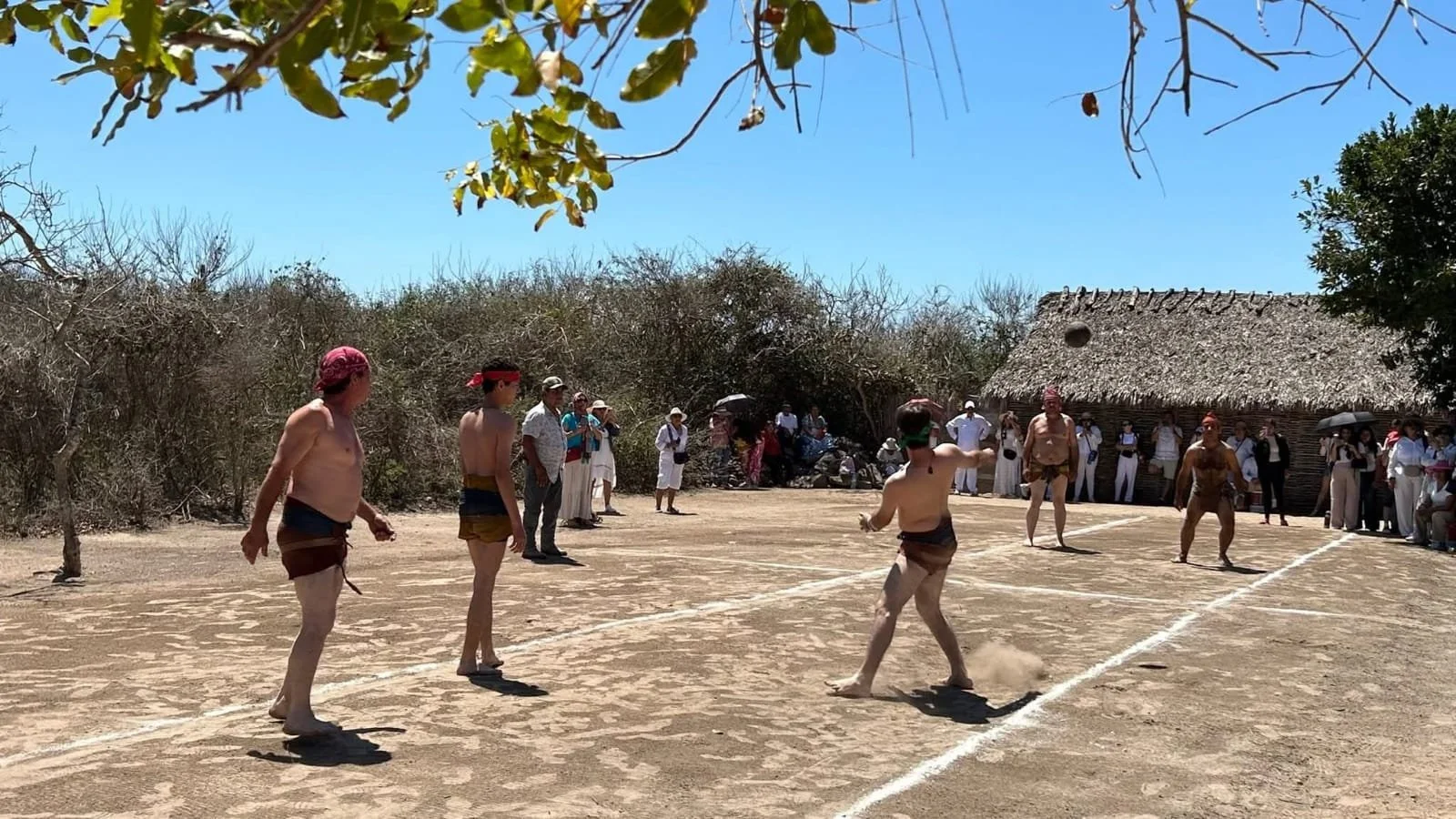
Photo from Jose Lizarraga
The Three Surviving Forms of Ulama
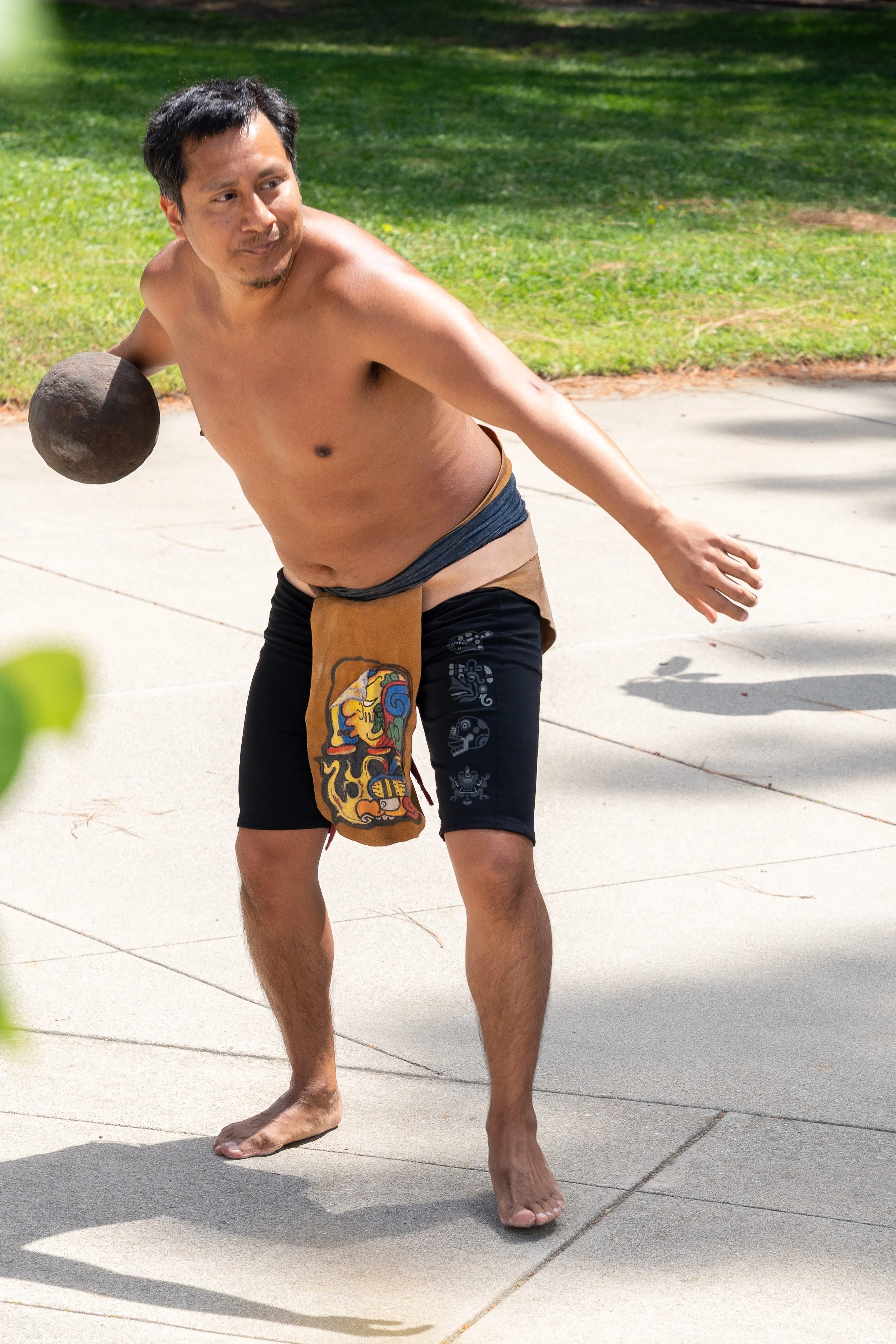
Ulama de cadera (hip), mazo (mallet), and brazo (arm) survived in Sinaloa. Ulama de cadera (hip) is played by striking a solid rubber ball with the hip or upper thigh. The ball can weigh around three to four kilograms, turning a return into a fullbody action. Pelota mixteca which survived in Oaxaca uses a smaller, lighter ball struck with the protected glove and weighs 6 to 7 kilograms. Juego de pelota Purépecha or Uárukua Ch’ankua which survived in Michoacán uses a wooden bat or mazo. Each developed its own local rules, scoring systems and traditions, reminding us that “the Mesoamerican ballgame” was always a family of games rather than a single fixed -sport.
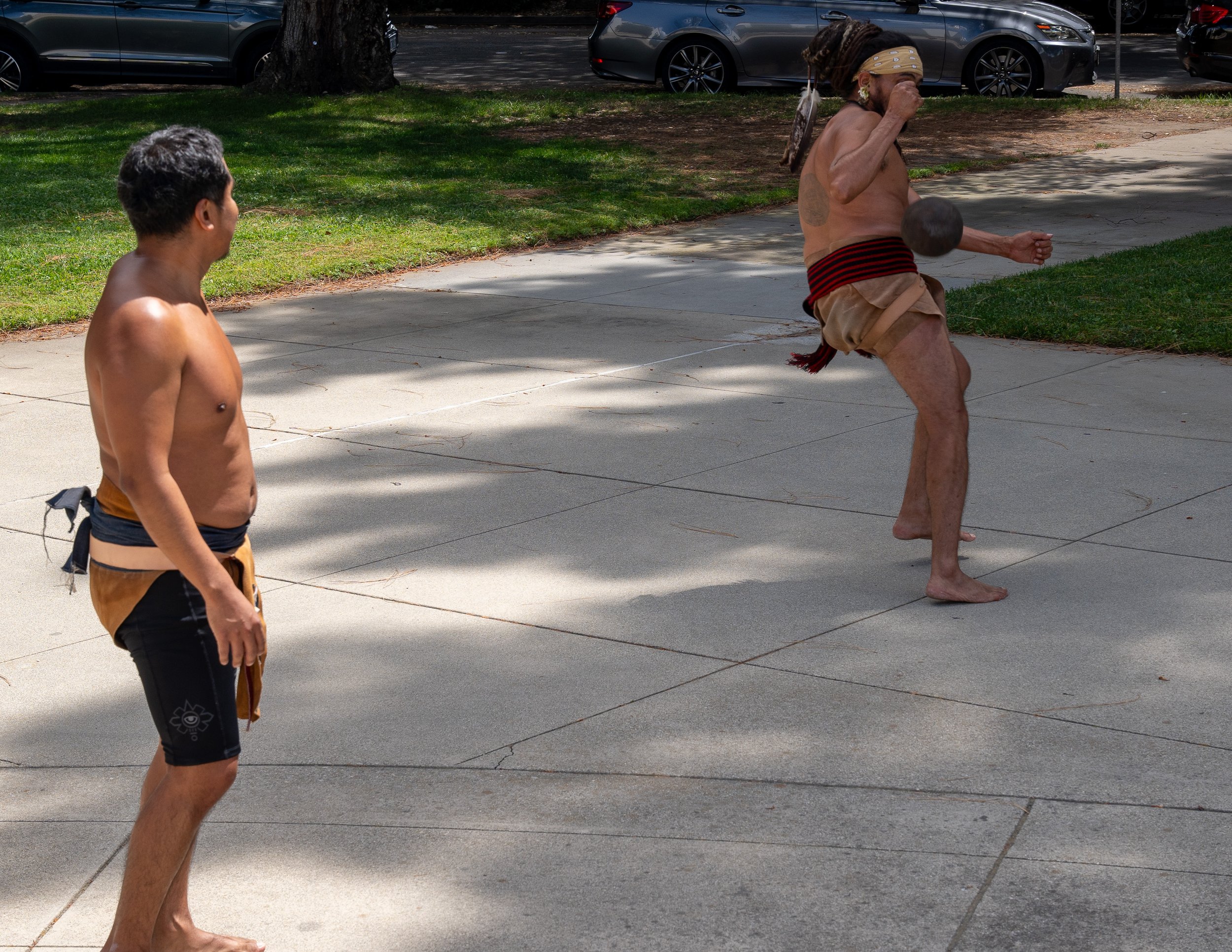
Weha Kiskeh team playing the cadera form of ulama
How Ulama Is Played Today
According to Jose, the hip-based variant of ulama is played on a court known as a “taste”, measuring 50 meters long by 3.5 meters wide and divided by a center line called “Analco”, a term that translates to "on the other side of the river" or "at the river's edge."
Teams consist of five or six players each; while the players themselves conduct the match, the “veedor” (umpire) holds ultimate authority. He intervenes whenever a dispute arises regarding a contested play, simply declaring which team is awarded the point in question; a ruling that is final and not open to further argument. The winning team is the one that manages to accumulate eight points. Achieving this is no simple task, however, as the game includes a subtraction rule: at certain stages, if one team catches up to the other, the trailing team's accumulated score may be wiped out and reset to zero, ensuring there are no ties in this format.
The Current Courts in Sinaloa
According to Jose, current playing fields for the cadera (hip-game) vary in Sinaloa.There are currently three tastes (playing courts) located in the municipality of Mazatlán:
The first is in the community of La Mora Escarbada, within the El Quelite sindicatura (administrative district).
The second is in the community of La Sábila, the "Chaute" taste also within the El Quelite sindicatura.
The third is the Miguel Ángel Lizárraga Arellano taste, located in the community of Los Llanitos within the Mármol sindicatura.
Although this cadera variant is also played in Escuinapa, there is no permanent taste there; instead, the game is played on a soccer field where the court is marked out for training sessions or matches. These courts are maintained by the players themselves, and it is their effort and dedication that keep the tastes and the game alive.
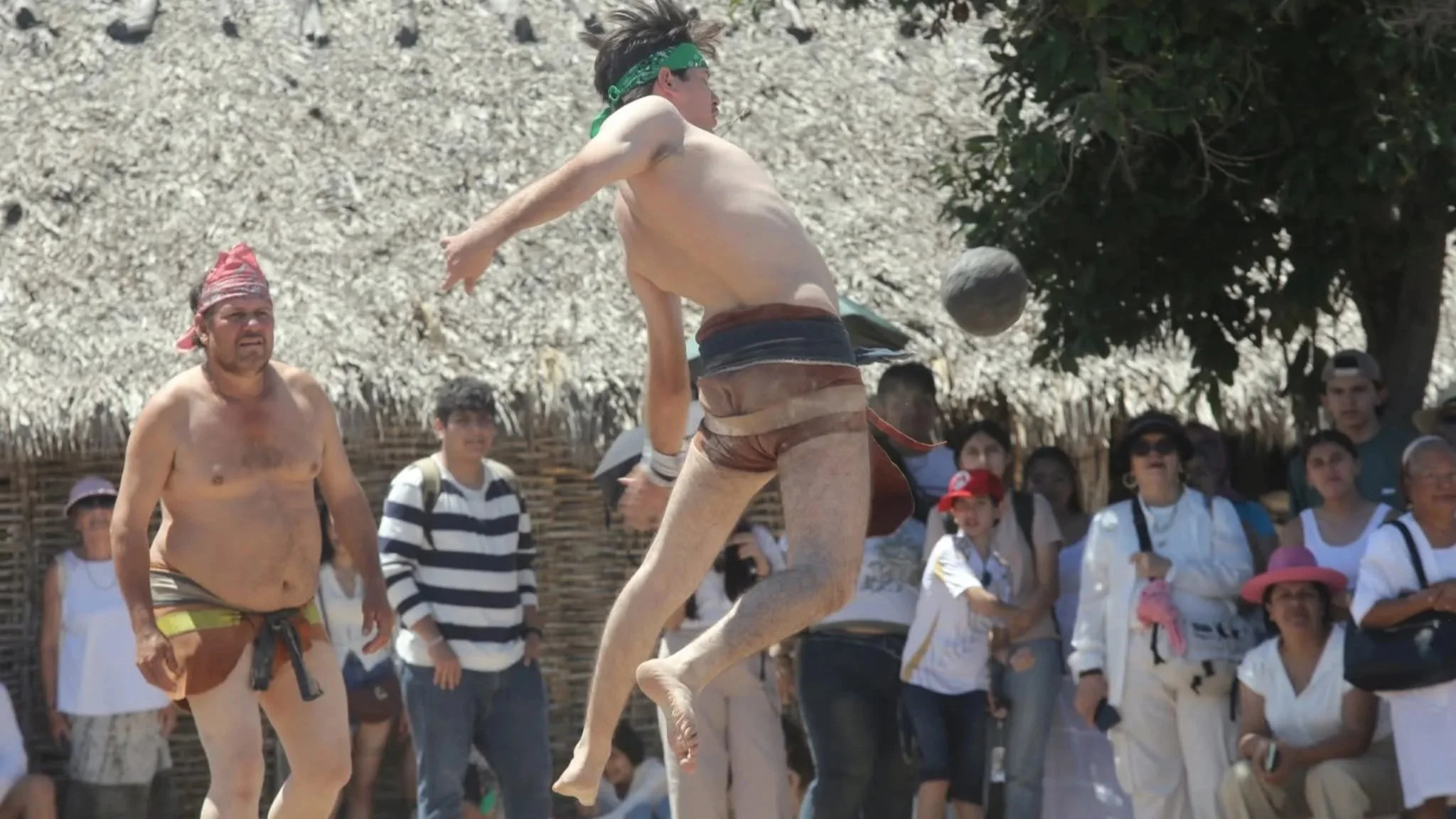
The Families Who Kept the Game Alive
Although the practice was once widespread across various communities starting in the 1980s, it is now kept alive primarily by specific families in communities within the municipality of Mazatlán.
These include the Lizarraga Covarrubias family in La Mora Escarbada and La Sábila; the Osuna Machado and Lizarraga Osuna families in Los Cedros and Los Llanitos; the Páez family in Los Llanitos; the Osuna Bonilla family in El Chamisal; and the Huayra López and Huayra Ríos families in Escuinapa.
The Lizarraga Covarrubias family is perhaps the most deeply connected to this generational tradition. Originating in the community of La Mora Escarbada, they played a pivotal role in introducing the practice to the south of the country in the 1990s. For the past eleven years, a member of the family has served as a coach and co-founder of teams across more than twelve Mexican states and has conducted training sessions for teams in Belize and California. He is the president of the Federación Mexicana Deportiva y Tradicional de Ulama de Cadera A.C. (FEMUC) and a leading artisan in the crafting of the rubber balls used for the sport; an estimated 300 of his balls are currently in use across Mexico and at least five other countries.
It is also important to acknowledge other communities that kept the game alive until relatively recently, such as El Quelite, El Quemado, El Habal, La Noria, Puerta de Canoas, La Palma Sola, El Chilillo, Villa Unión, El Verde (Concordia), and El Walamo, to name a few. The sheer number of places, towns, and municipalities that have contributed to the practice of ulama in Sinaloa over time is truly impressive.
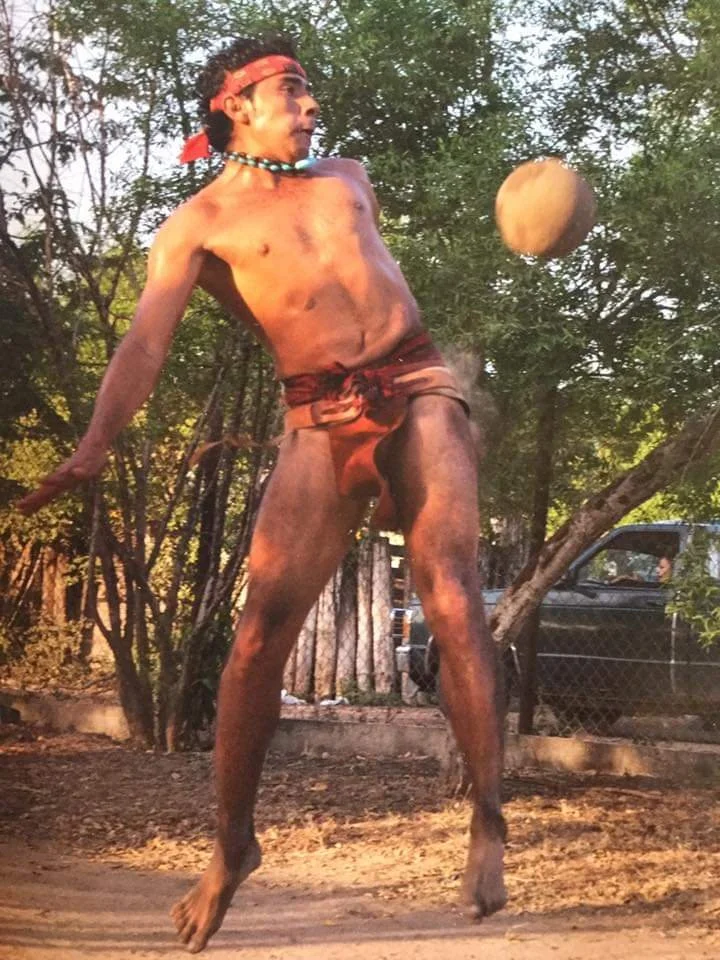
Jose Lizárraga
Weha Kiskeh
Weha Kiskeh is the only team in the United States associated with Mexico’s ulama league through the Lizárraga family tradition. Its name means “those who traveled far away,” a fitting description for a team made up of members from different parts of Mexico who now live in Los Angeles. Their approach to the game follows the form of ulama passed down through the Lizárraga family, with an emphasis on technique, disciplined training and the continued development of the sport itself. The team regularly travels to Mexico to compete alongside other teams within the Lizárraga lineage, carrying the game between Sinaloa and Los Angeles and extending a living tradition beyond its original courts.
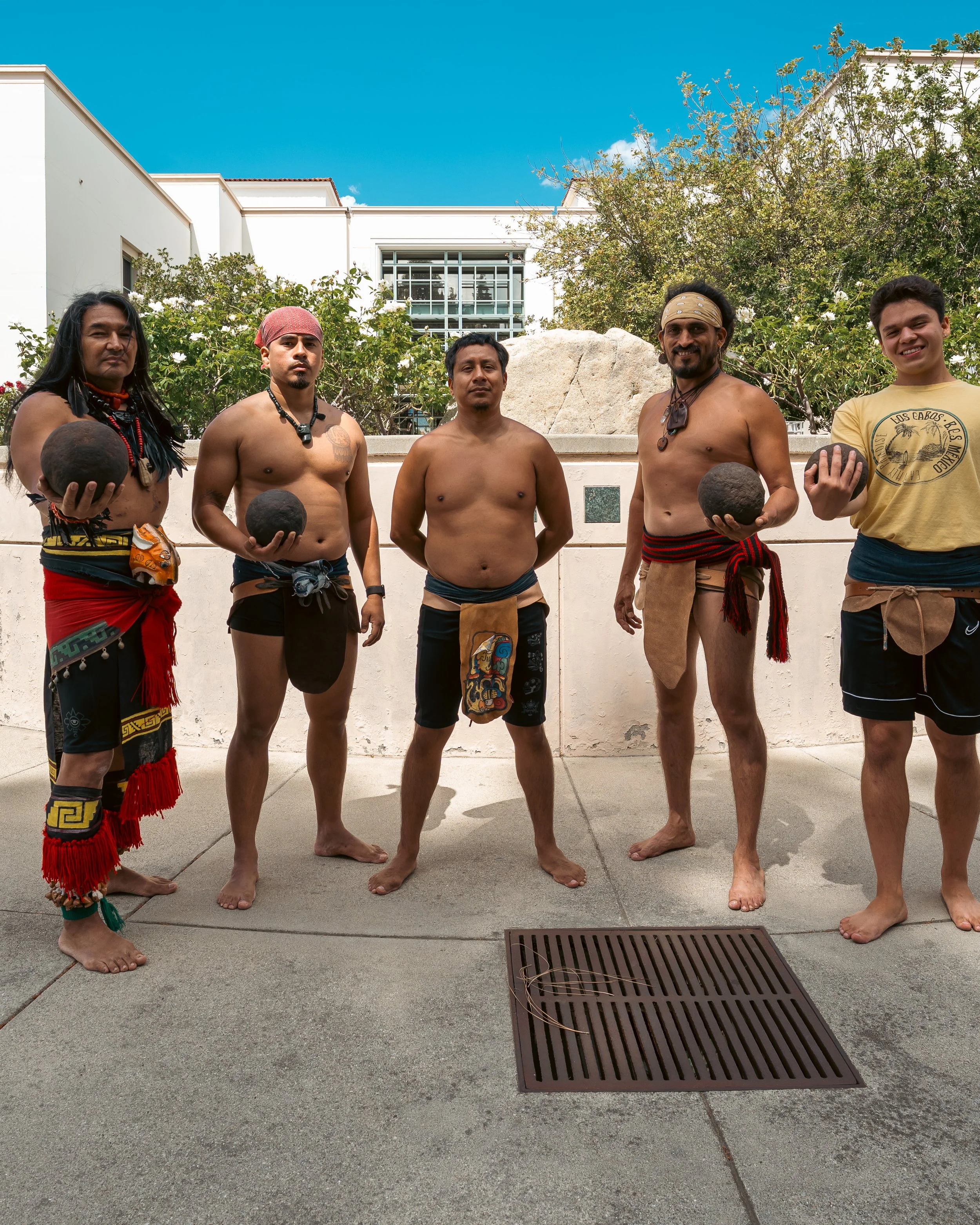
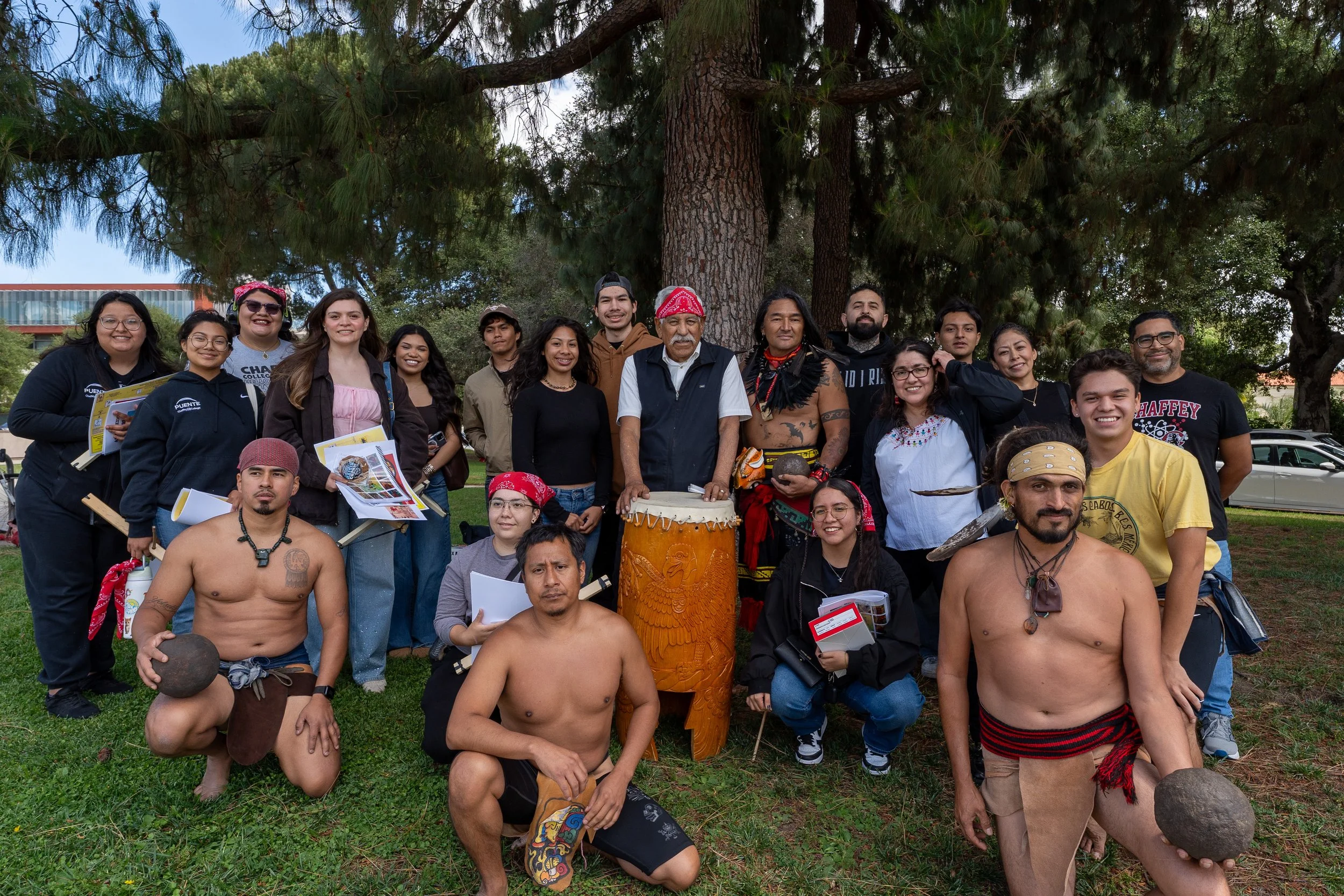
Some of the Weha Kiskeh players who taught students an introduction to ulama at the Azteca-Mexica heritage event in April 2026 at The Claremont Colleges
A Tradition Still in Play
This matters because ulama is not simply an ancient game reconstructed from stone reliefs. It is knowledge held in the body: how to receive the weight of the ball, how to read its bounce, how to wrap the hips, how to argue a point, how to teach the next player.
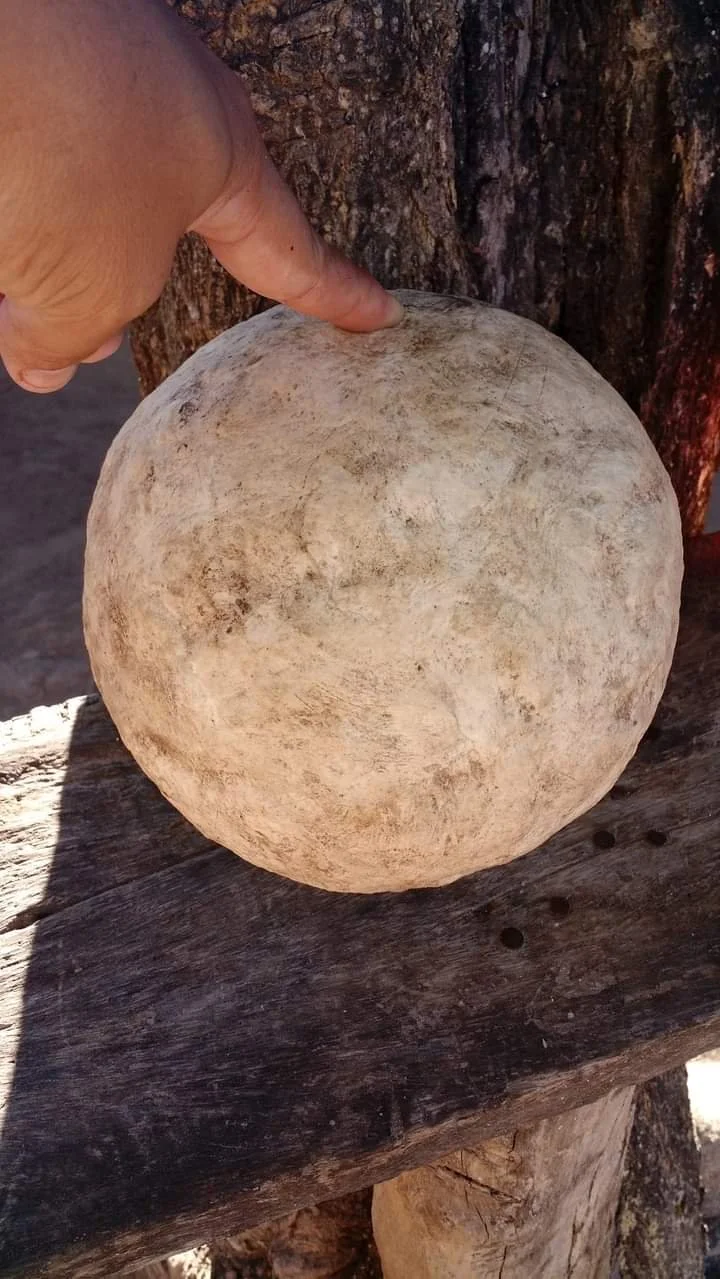
An example of the rubber ball which is made in the traditional method by the Lizárraga family
Archaeology can show us the courts. Codices and sculpture can show us the players. In Sinaloa, the game shows us something else the possibility that a tradition can survive because people continue to put it into motion.
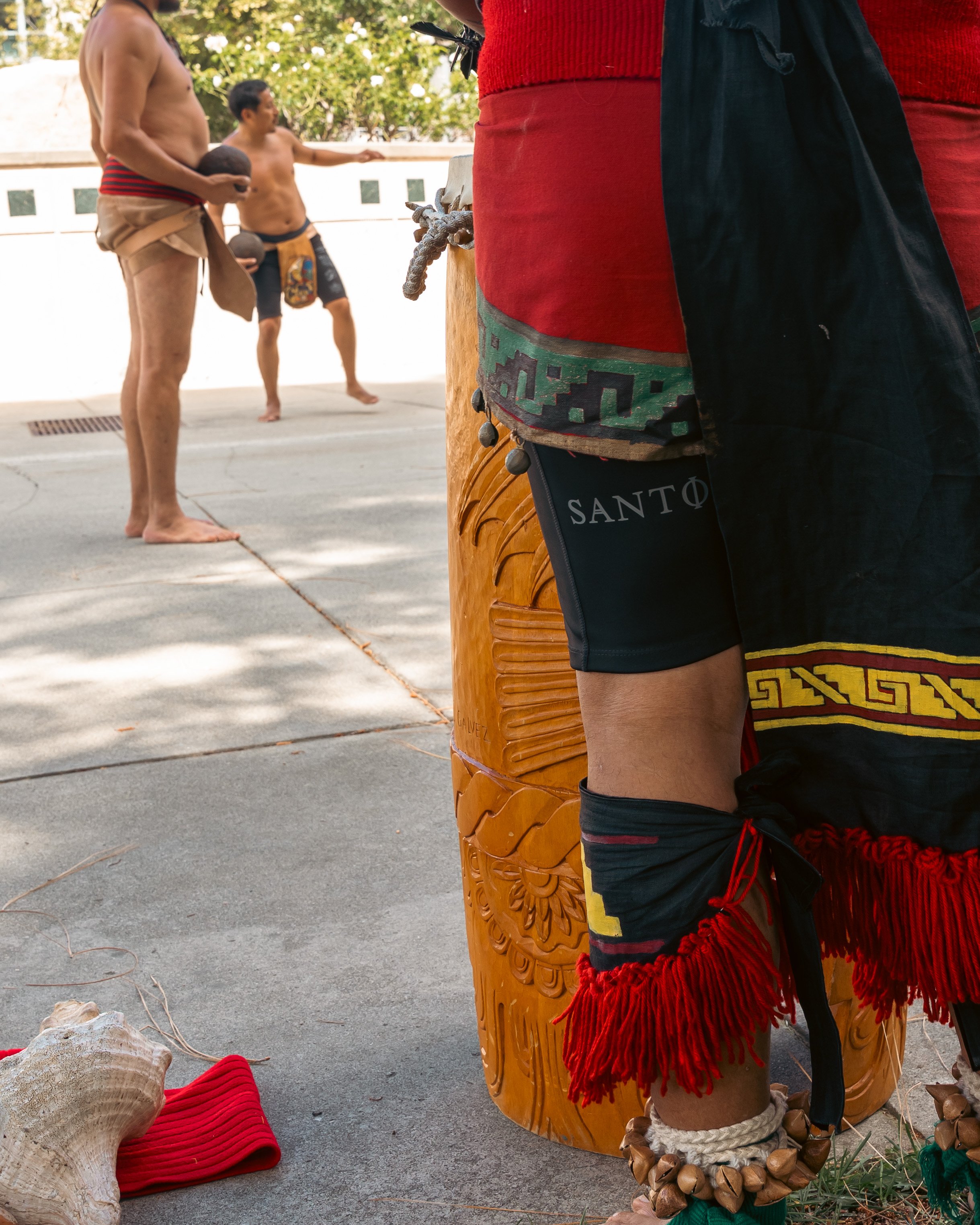
According to Jose, ulama has endured in these communities through intergenerational transmission, with families passing the tradition down from parents to children. They occasionally arrange for their teams to face off against others in neighboring communities. Events that turn into festive occasions for family bonding and draw spectators from other towns, fostering a true sense of community where everyone joins in the celebration. Matches typically last three hours or more, and players continue to use the traditional scoring system inherited from their grandparents. In doing so, they keep alive the knowledge surrounding hip-ulama from maintaining the courts and the practice itself to upholding the rules and, most importantly, preserving the respect and passion for the game that gives their towns a unique identity in the eyes of the world.
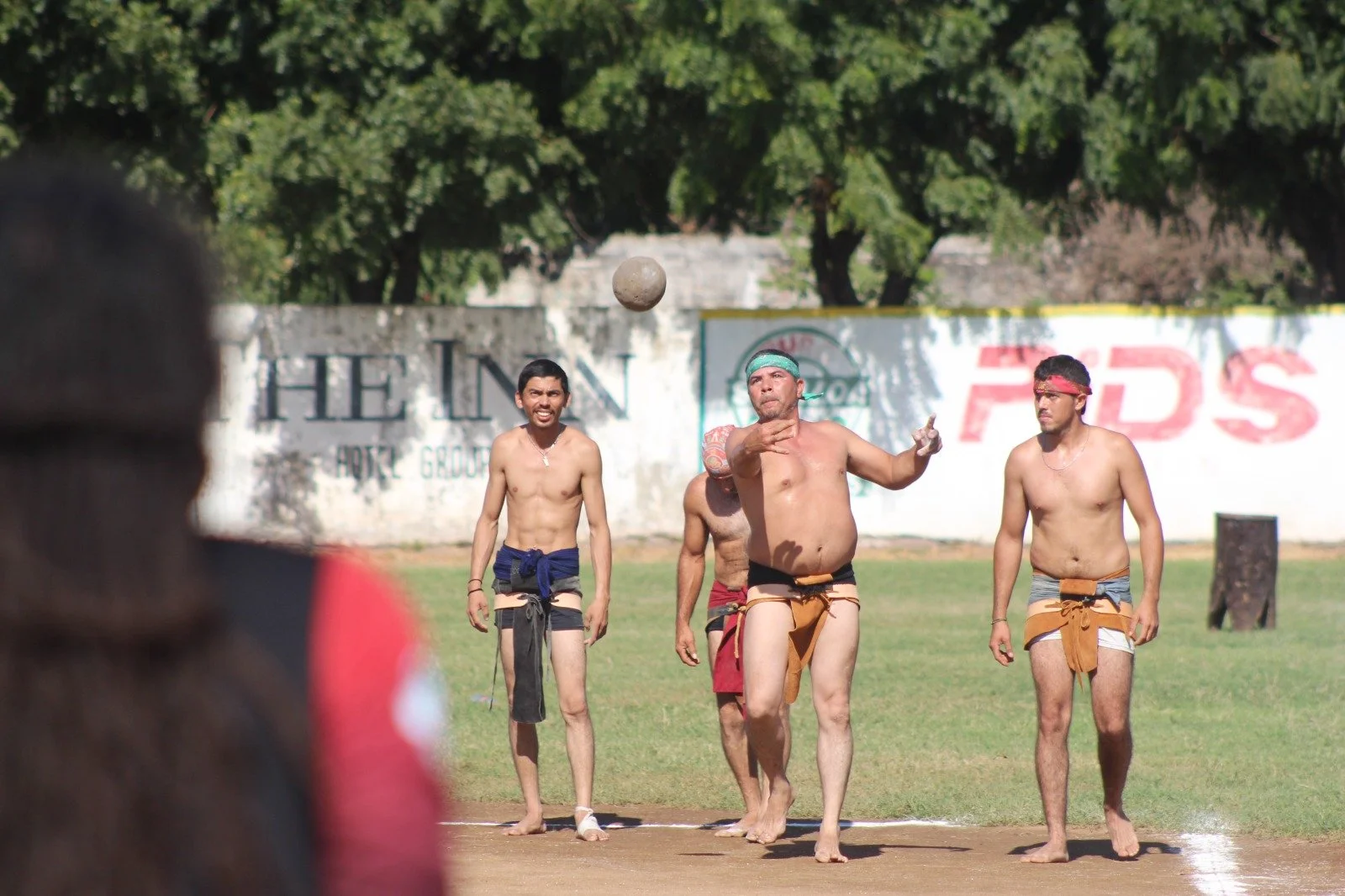
Written By Esteban Galvez. Special thanks to Jose Lizzaraga and Eduardo Martinez for their expertise and collaboration on this journal entry.
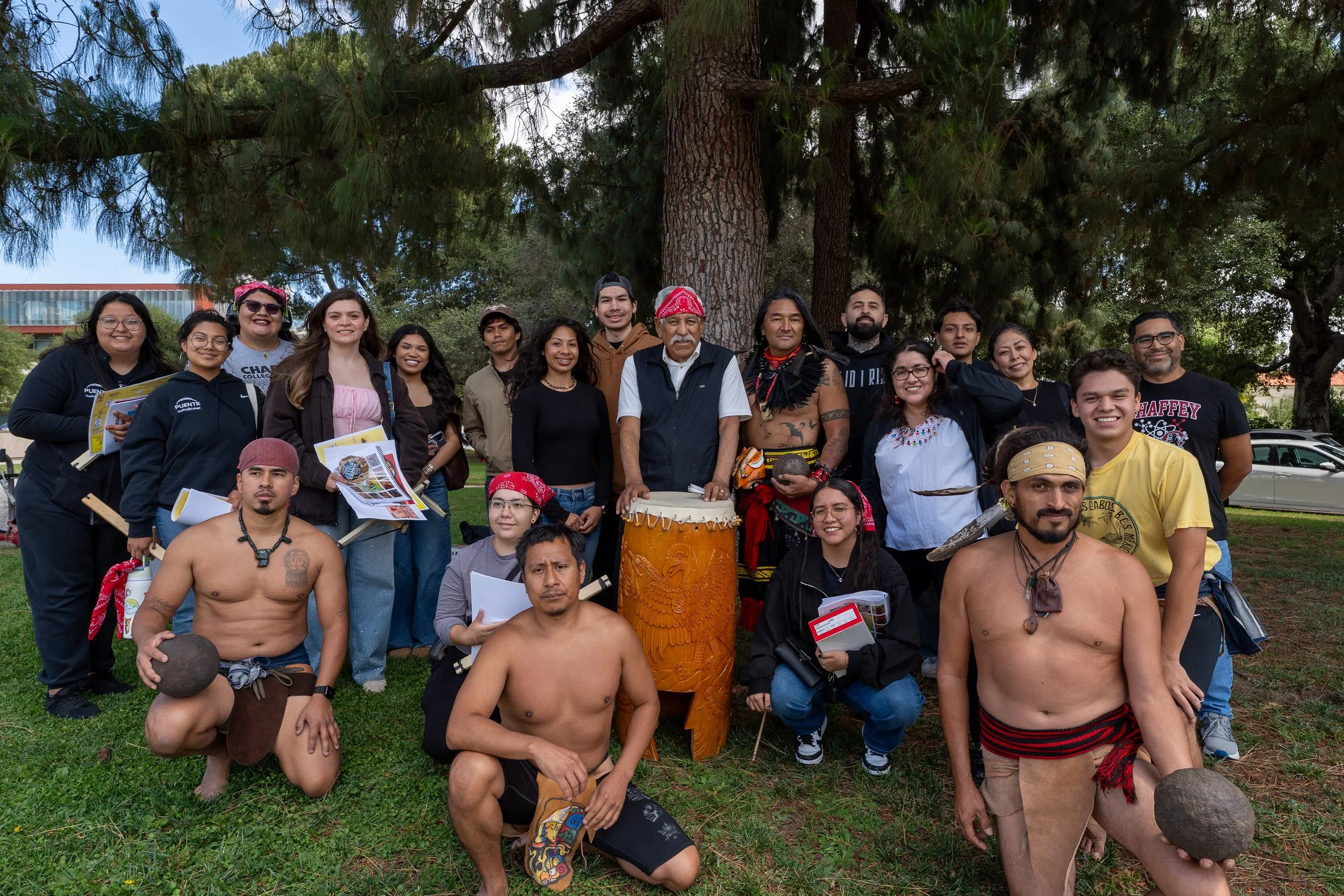
Azteca-Mexica Heritage at The Claremont Colleges
Ollin at Claremont: Movement, Memory, and the Living Ballgame
Ollin at Claremont: Movement, Memory, and the Living Ballgame
Before ollin was explained, it was heard.
A sonaja shook in the room at The Claremont Colleges, its rhythm opening the gathering before the idea had fully entered language. On April 11, 2026, Santo-Fi hosted Aztec-Mexica Heritage Day, an afternoon led by Maestro Javier Galvez, educator, leader of Los Danzntes del Sol, and longtime teacher of Azteca-Mexica culture and traditions at The Claremont Colleges and Claremont Graduate School. His father (Ricardo Galvez) founded of Los Danzantes del Sol in 1917 - a Matlachines dance troupe who has been vital to keeping the ancestral dances of Mexico alive in North America.
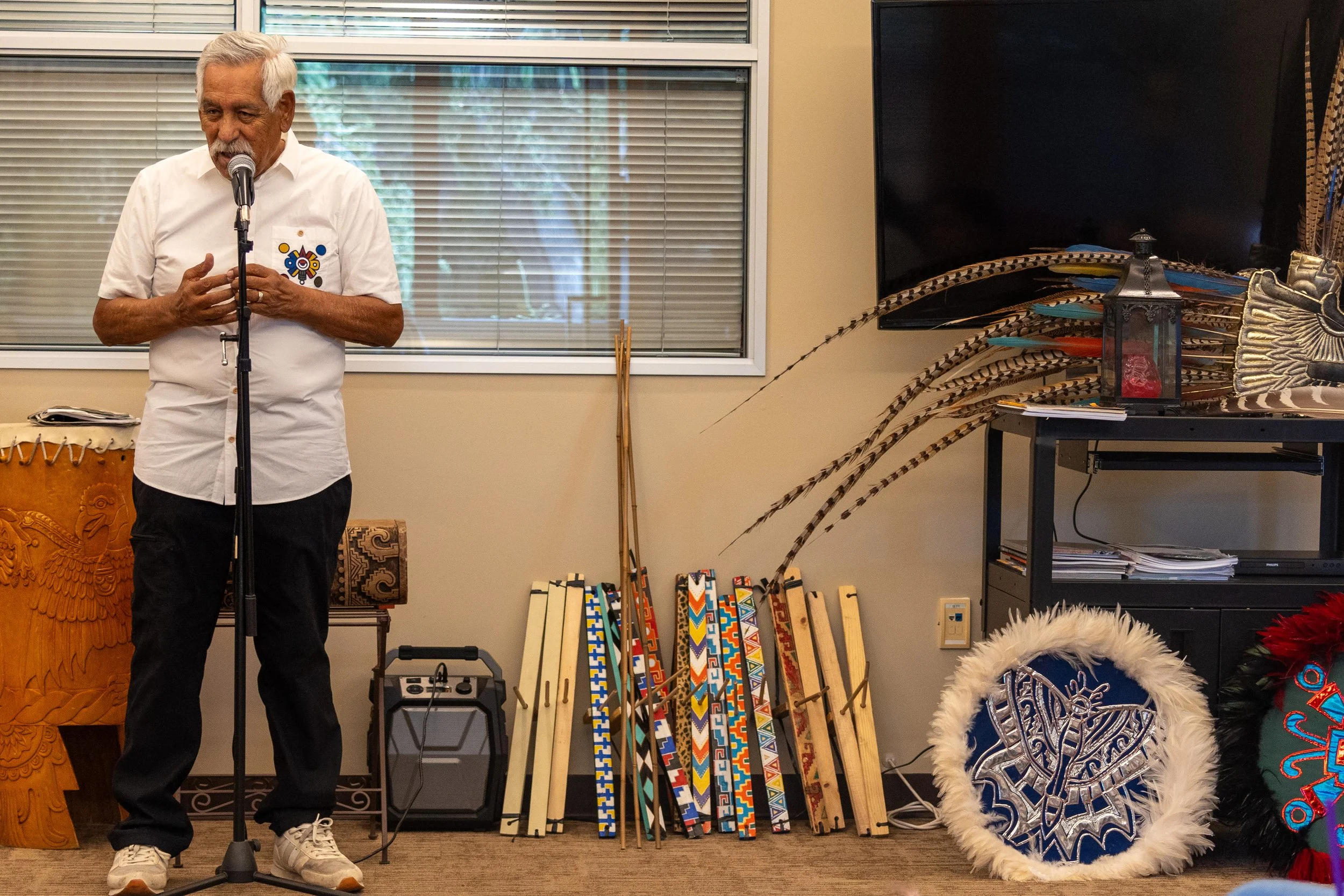
Javier began with history: the migration traditions of the Mexica, the movement toward the Valley of Mexico, and the eventual founding of Tenochtitlan, the island city that would become the center of Mexica political, ceremonial, and cultural life. The story was not presented as distant material. It was carried into the room as something still asking to be understood through the body.
From there, Javier moved toward the word that held the afternoon together: Ollin. Often translated from Nahuatl as movement, Ollin speaks to more than motion in a simple physical sense. It is also translated as Nahui Ollin - 4 directional movements. Within the gathering, it became a way to think about life as something unstable, demanding, and alive… A condition shaped by struggle, transformation, rhythm, responsibility, and renewal.
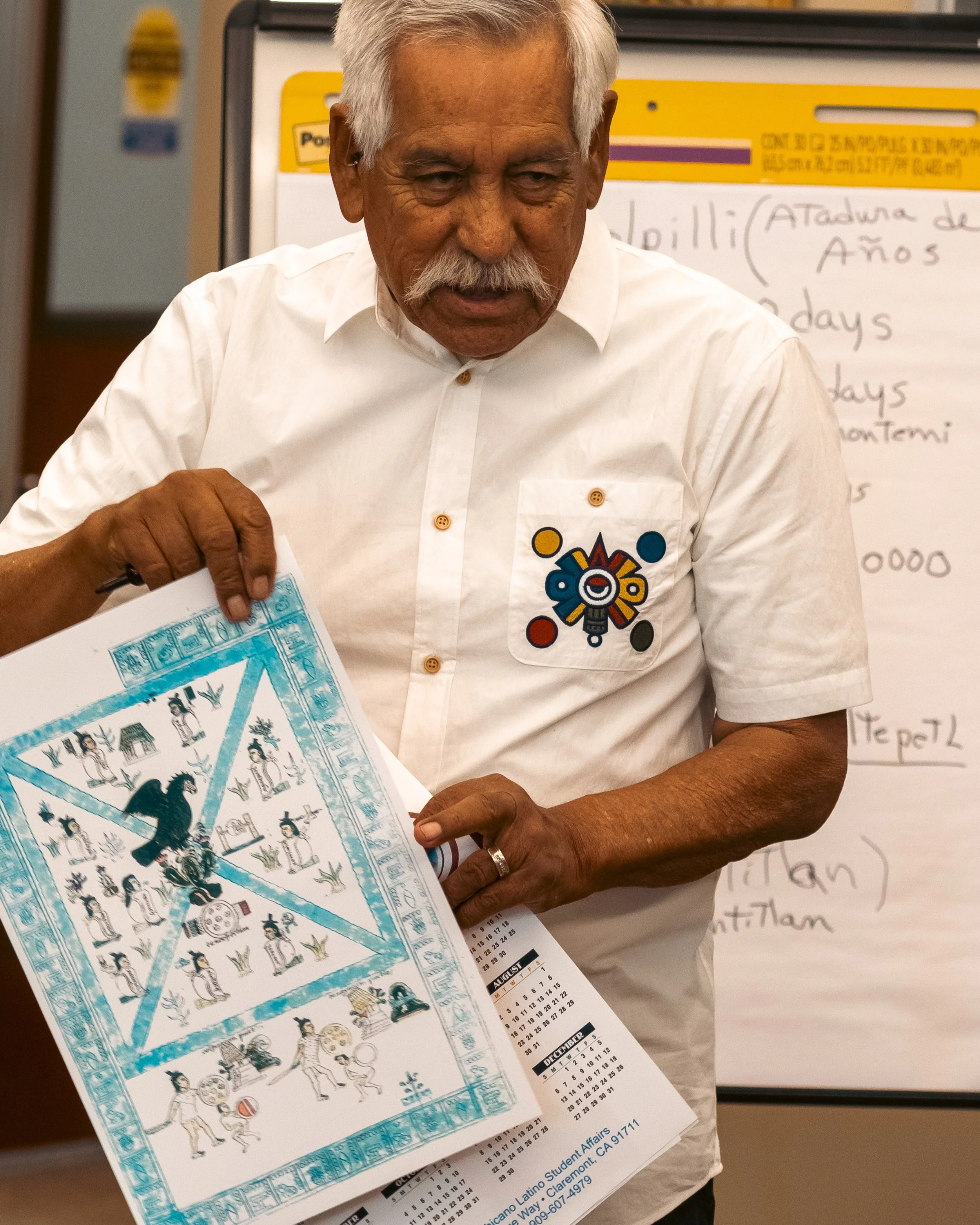
Javier Galvez explaining Ollin
To live well, in this framing, is not to only hear about movement. It is to participate consciously in it.
That idea became clearer when the lecture gave way to music. Javier introduced the students to Matlachines, a living ritual dance tradition shaped through colonial era encounter, Catholic devotion, Indigenous presence, and regional Mexican practice. Its relationship to Azteca-Mexica dance is not a straight line or a simple survival story. It is more layered than that: historical, symbolic, devotional, and embodied.
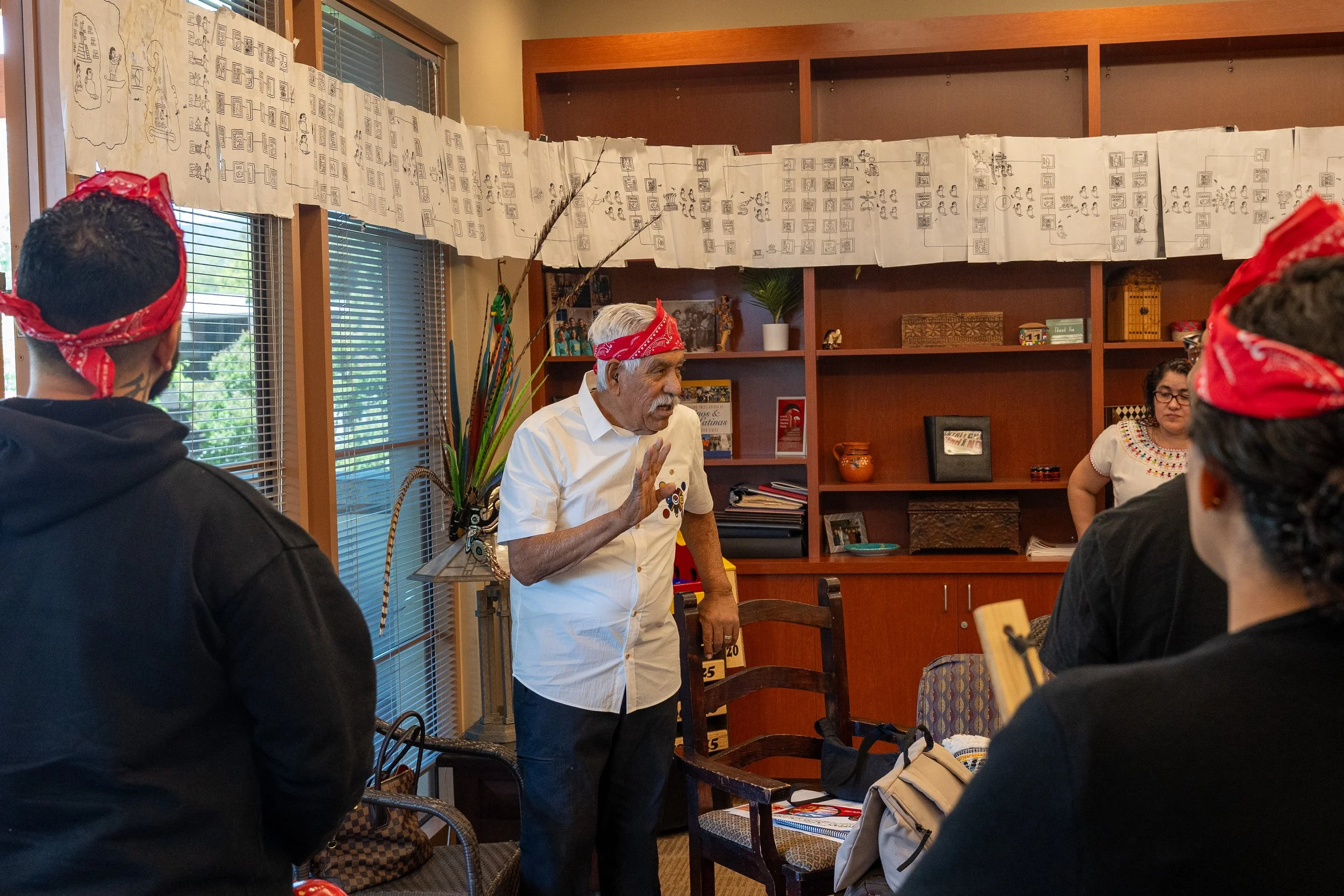
The students learned the fundamental steps with a stylized bow and arrow in hand, while sonajas marked the pulse of the drum. One - Two - Three - Four. This was the central timing for the entire dance. A timing indicative of Ollin…At first, the room carried the quiet hesitation that often comes when people are asked to learn with their bodies rather than simply listen with their minds. Then the rhythm began to organize them. Feet found the beat. Hands adjusted to the weight of the objects. The bow and arrow evoked hunting and warrior imagery, but within the dance they also became instruments of timing and focus.
What had started as a lecture became a form of attention and unison.
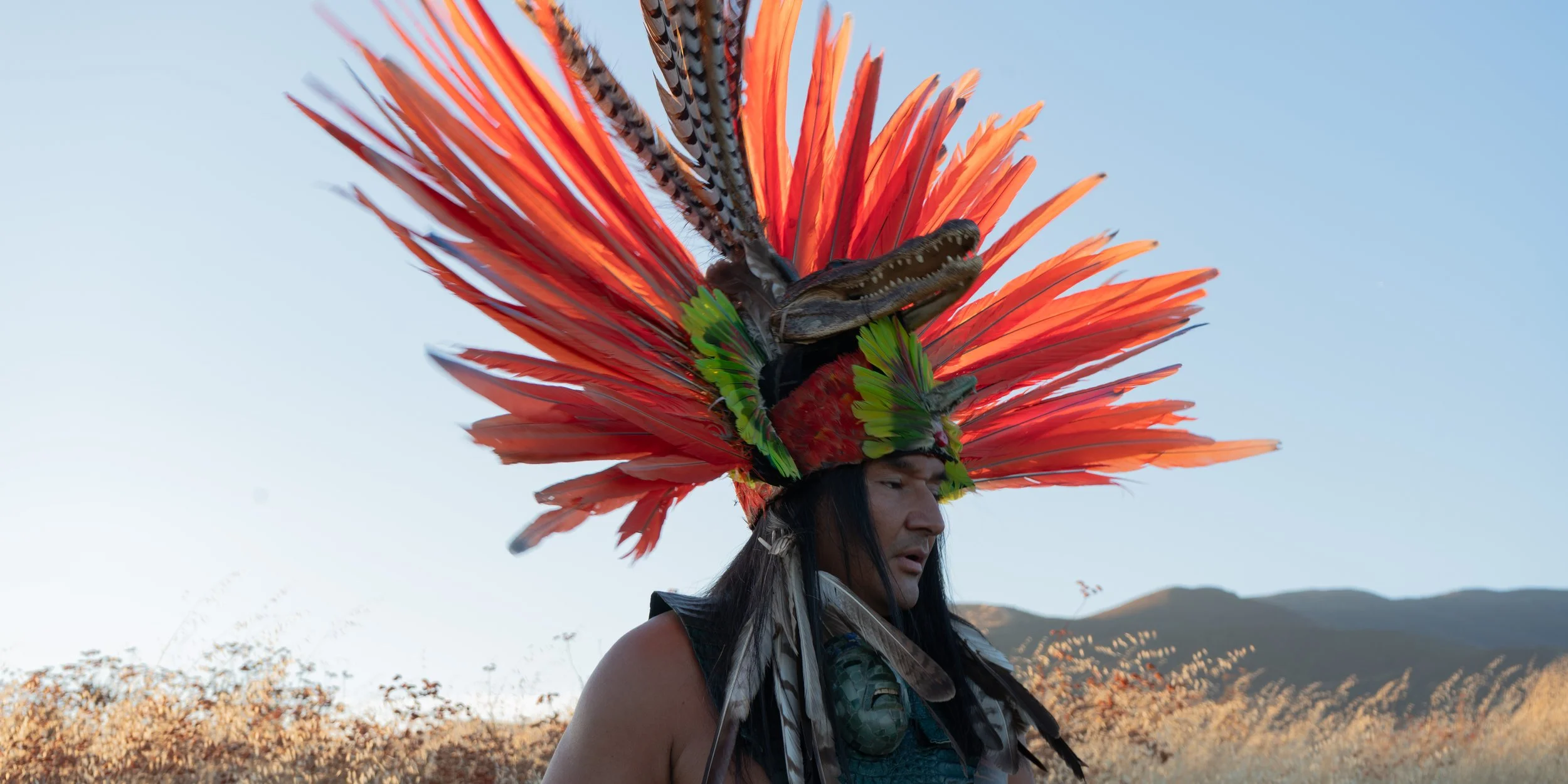
After the dance, Javier introduced his former student, Eduardo Martinez, who entered wearing Azteca regalia. Featherwork, beadwork, and embroidered detail gave the next part of the gathering a different visual presence. Contemporary Azteca regalia is often organized around the body in layers: the penacho or feathered headdress frames the head, while the chest is marked by a pechera or pectoral piece carrying color, beadwork, embroidery, or symbolic design. Around the waist, dancers may wear a maaztlatl, tanganillo, skirt, or other covering, depending on the dancer, group, gender, and ceremonial context. Details such as wrist pieces, ankle rattles known as ayoyotes, and hand-held instruments extend the regalia into movement, allowing sound, rhythm, and visual form to work together as the dancer moves.
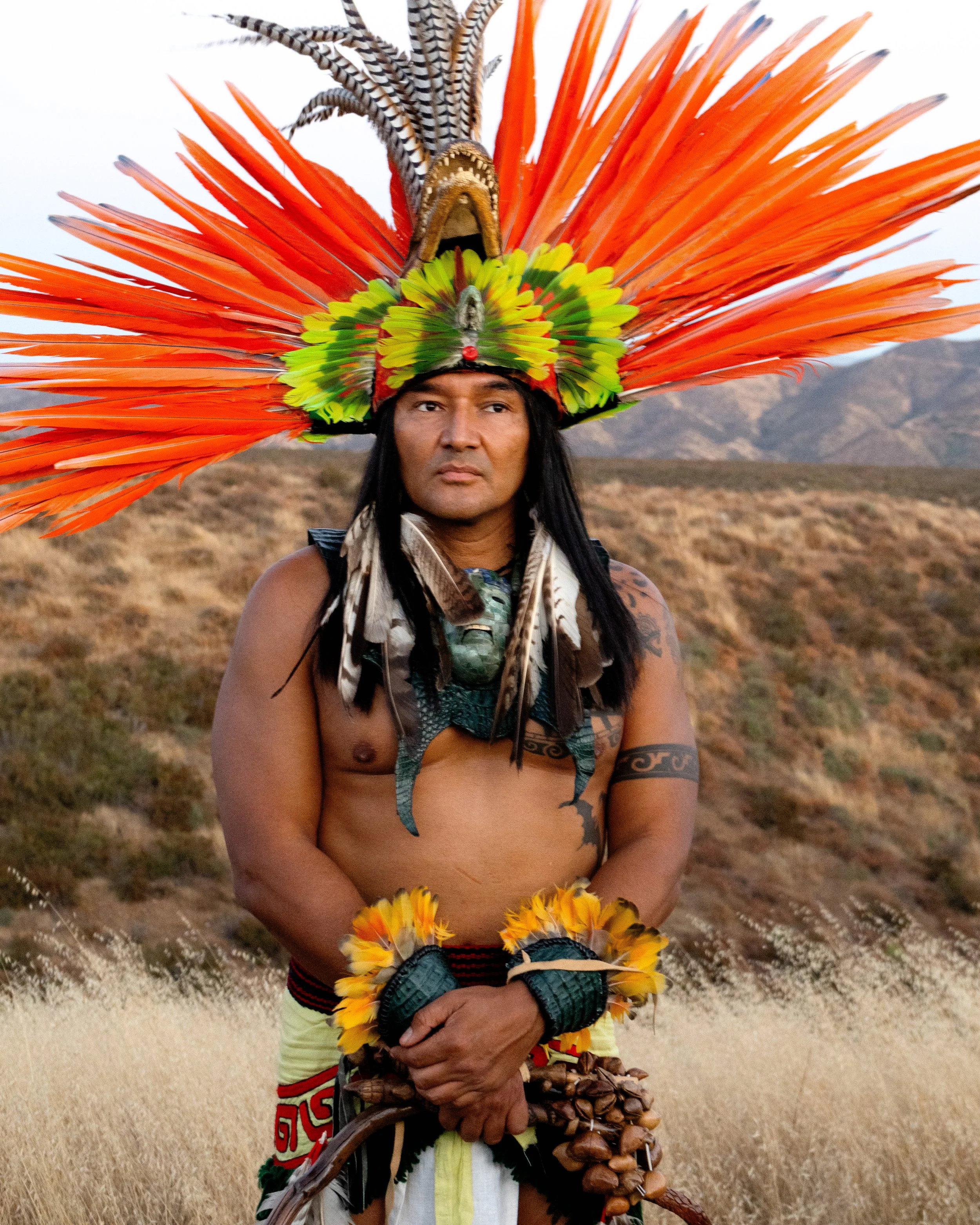
Eduardo spoke briefly in Nahuatl, taught a few words to the students, and introduced the history of olama, the contemporary form of a much older Mesoamerican rubber-ball tradition. Olama is often discussed in relation to ōllamaliztli, the Nahua ballgame played across parts of Mesoamerica. In earlier forms, players struck a heavy rubber ball, often with the hips, while wearing protection around the body. The game could be public sport, elite competition, ritual performance, and social gathering. In Mexica contexts, it was connected to ideas of conflict, movement, fertility, and the cycles of life and death. Some ceremonial games were associated with sacrifice, though sacrifice was not part of every match.
After Eduardo’s lecture, everyone moved outside, gathering in front of the Harvey Mudd library, where members of Weha Kiskeh led the group through olama. Weha Kiskeh, the Southern California olama team Eduardo belongs to, carries a name meaning “those who have returned.” On the grass, the meaning felt less like a title and more like a practice.
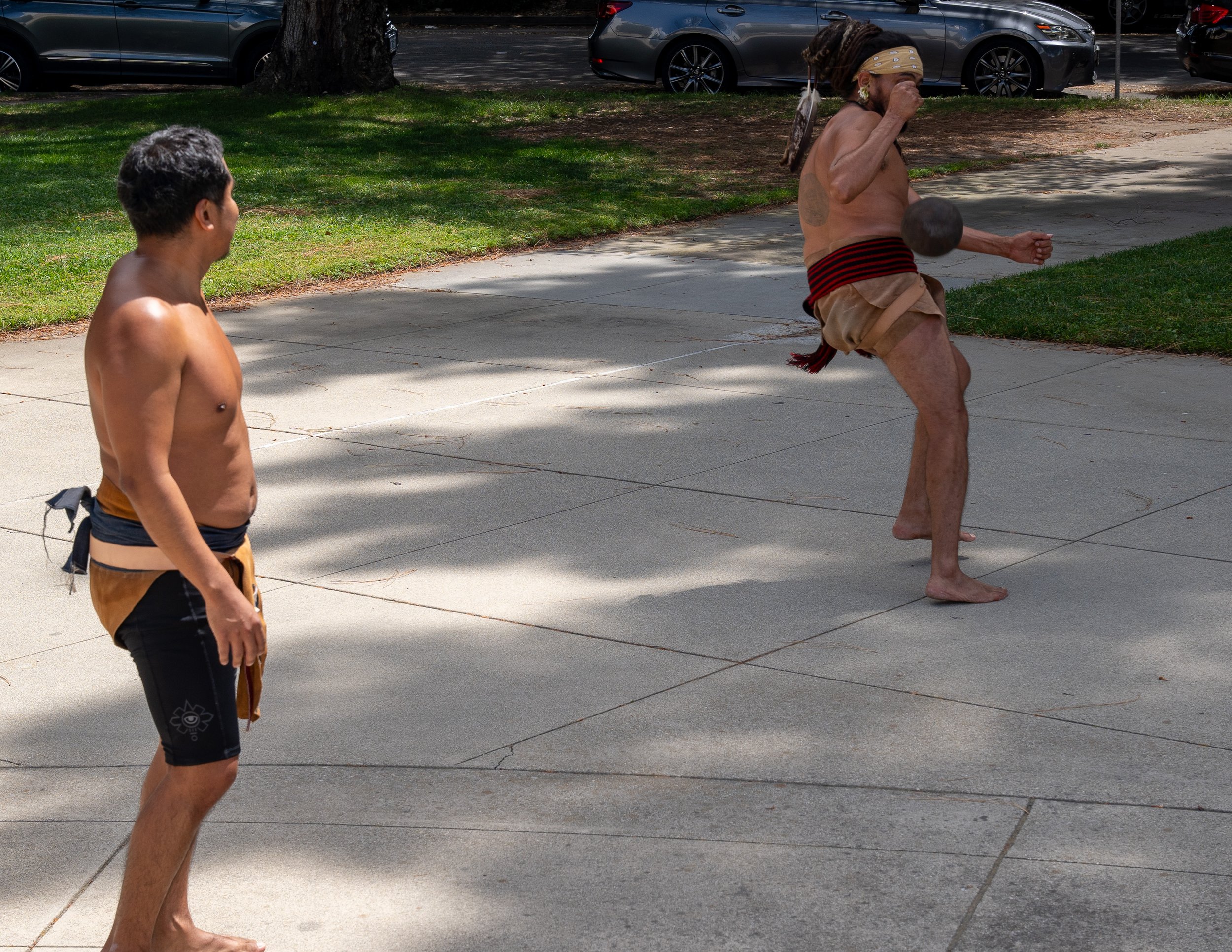
The ball changed the atmosphere immediately. It did not move like an idea on a page. It arrived with force. It asked for timing, commitment, and contact. Students watched, tried, missed, adjusted, laughed, and returned to the movement again. The body had to learn what the mind had just heard: that movement is not always graceful at first. It can be awkward, demanding, and difficult before it becomes fluid.
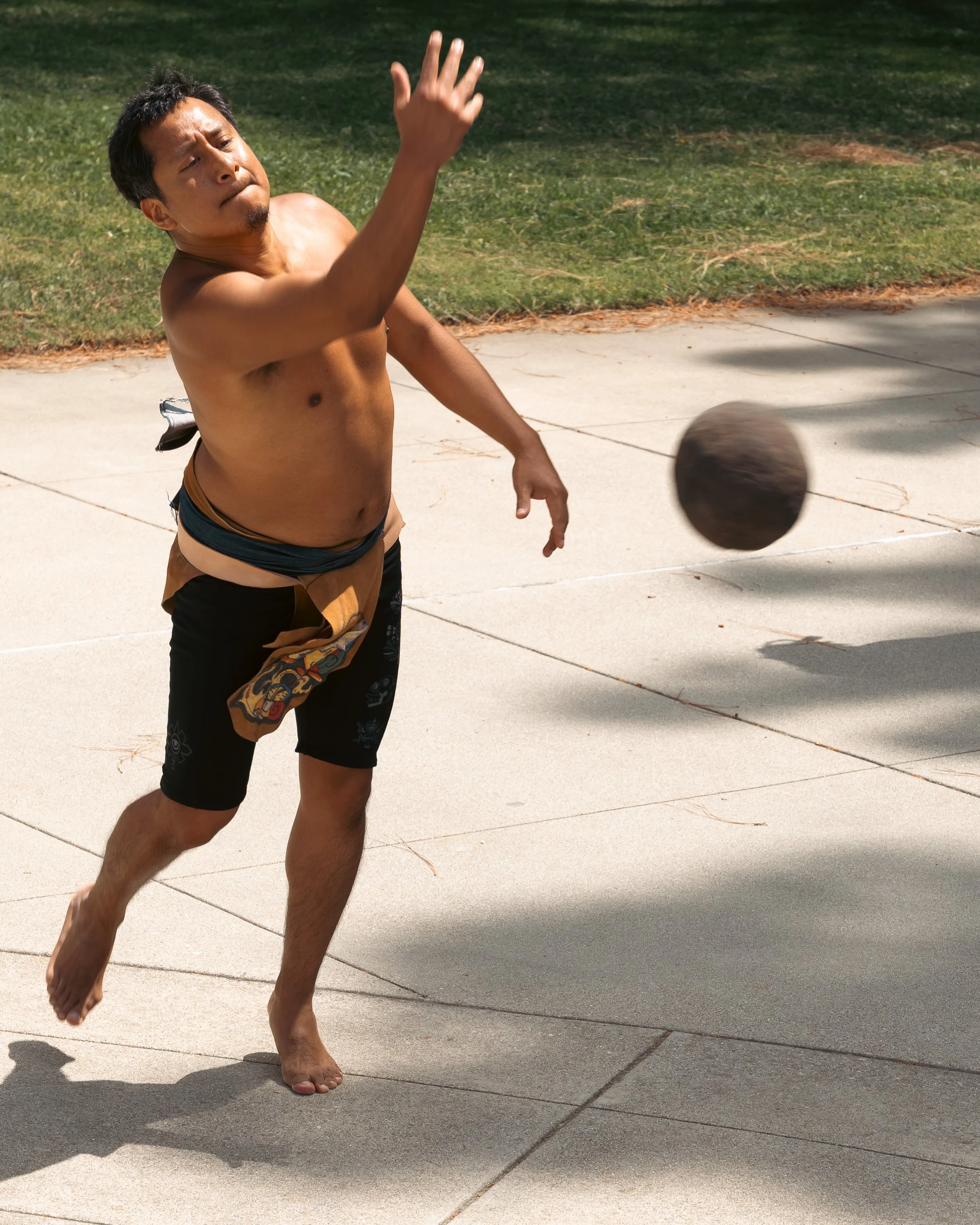
The challenge of hitting the ball correctly made those few times all the more sweeter.
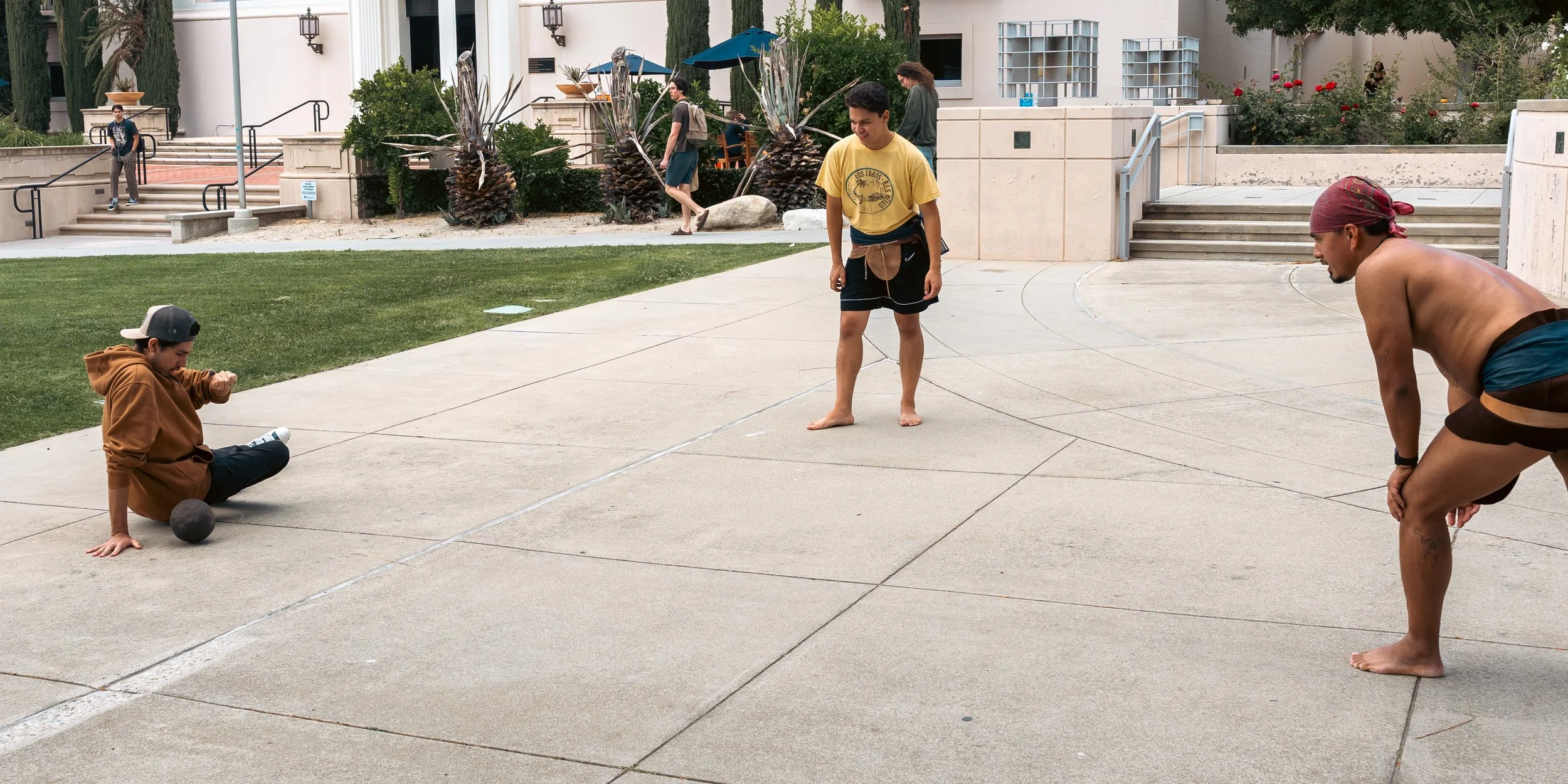
Morgan Smith (an attendee) learning from the Weha Kiskeh team how to hit the ‘hule’ or ball.
In front of one of the country’s most respected academic institutions, olama placed another form of knowledge beside the university: knowledge carried through tradition, music, dance, memory, impact, and play. The moment did not need to force a comparison between past and present. The comparison was already there — a library behind the students, a rubber ball in motion, a tradition being taught not as a museum object, but as something still practiced.
The afternoon began with knowledge and ended with bodies in movement together.
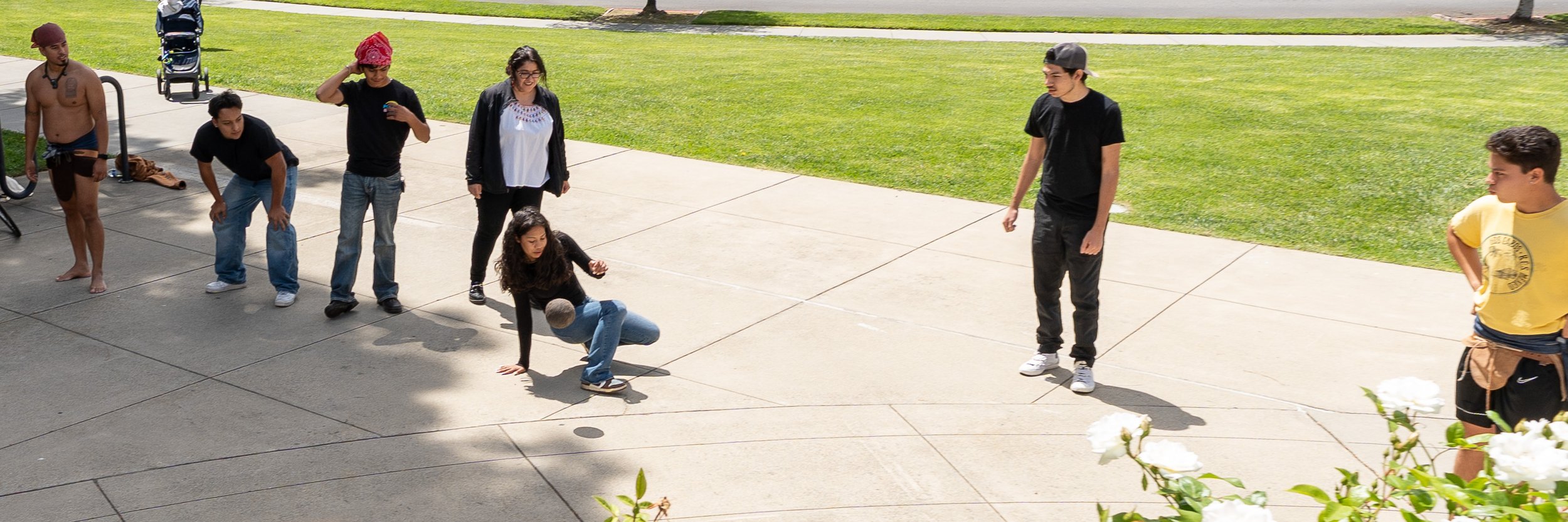
For Santo-Fi, this was the deeper lesson of ollin. Movement is not only change. It is participation. It asks something of the person inside it. To study culture responsibly is not simply to admire what came before, but to listen carefully, learn with humility, and recognize the living people who continue to carry these practices forward.
By the end of the gathering, ollin was no longer only a word. It had passed through music, footwork, language, regalia, instruction, play, and effort.
It had moved through the students themselves.
From Aztlan to Tenochtitlan: The Rise of the Mexica
From a legendary homeland to the founding of Tenochtitlan, the rise of the Mexica is a story of migration, endurance, and transformation.
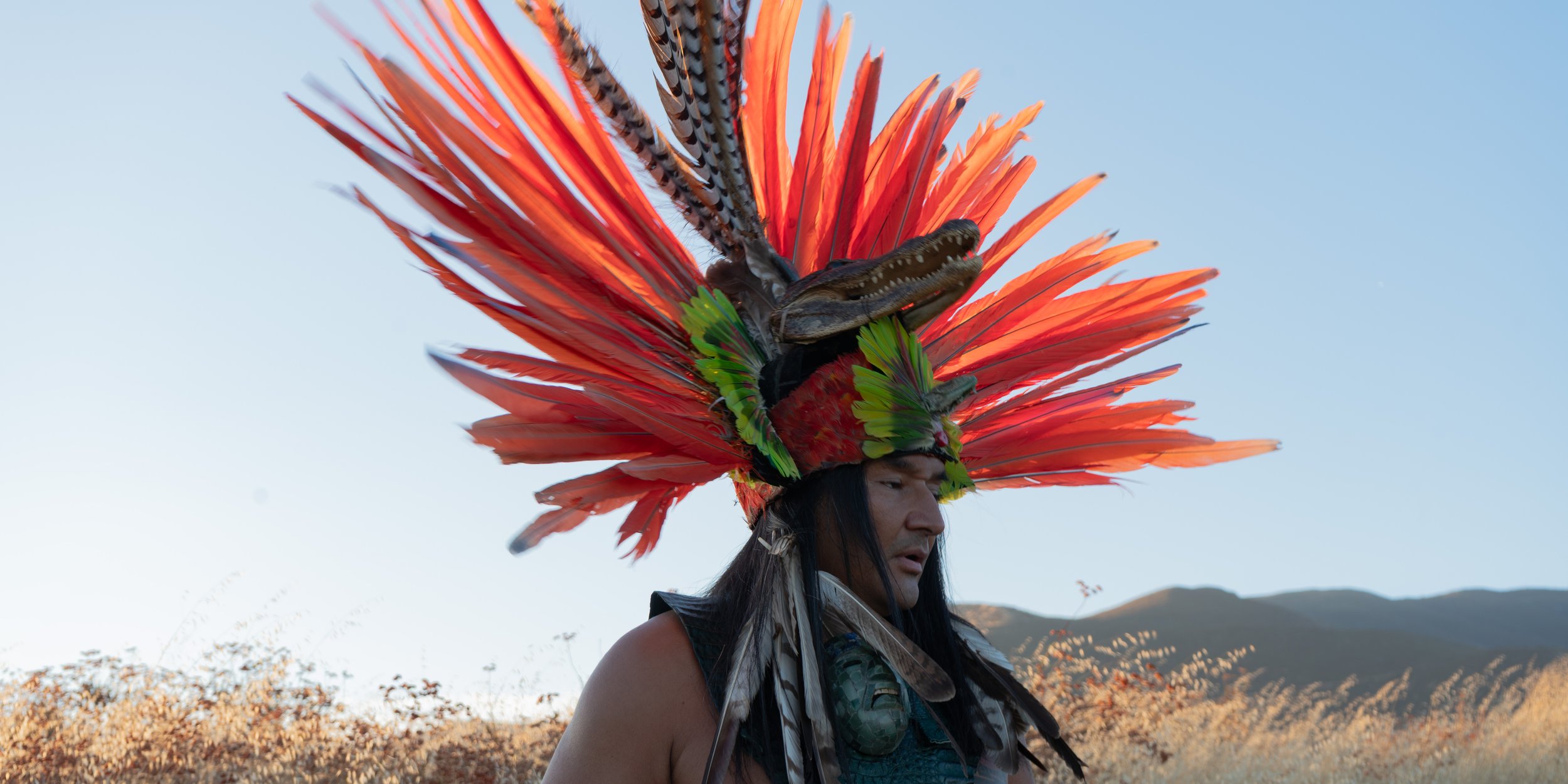
The Aztec-Mexica people were a Nahuatl-speaking group who migrated from a legendary northern homeland called Aztlan into central Mexico during the 12th and 13th centuries.
After years of wandering and serving as mercenaries for more powerful city-states, they settled on an island in Lake Texcoco in 1325, where they founded Tenochtitlan after witnessing the prophesied sign of an eagle perched on a cactus. This image later became the symbol of modern Mexico.
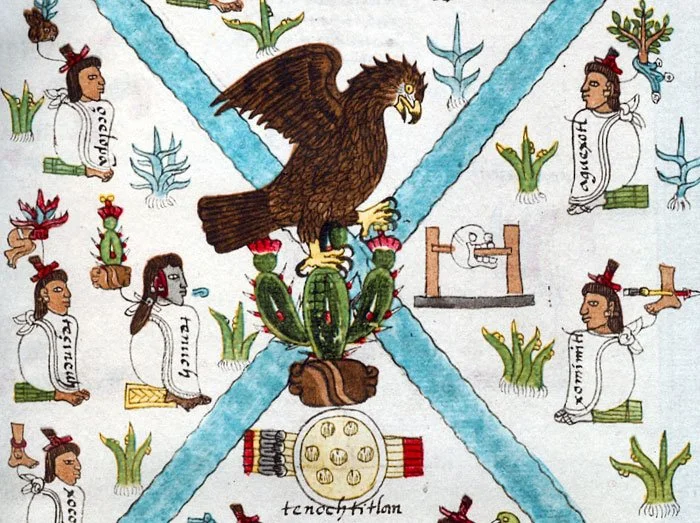
The term “Aztec” comes from this ancestral place and broadly describes the various peoples connected to that migration tradition, while “Mexica” specifically refers to the group that founded Tenochtitlan, the capital of the Aztec Empire. The name “Mexico” itself is derived from “Mexica,” reflecting their lasting cultural and historical influence on the region.
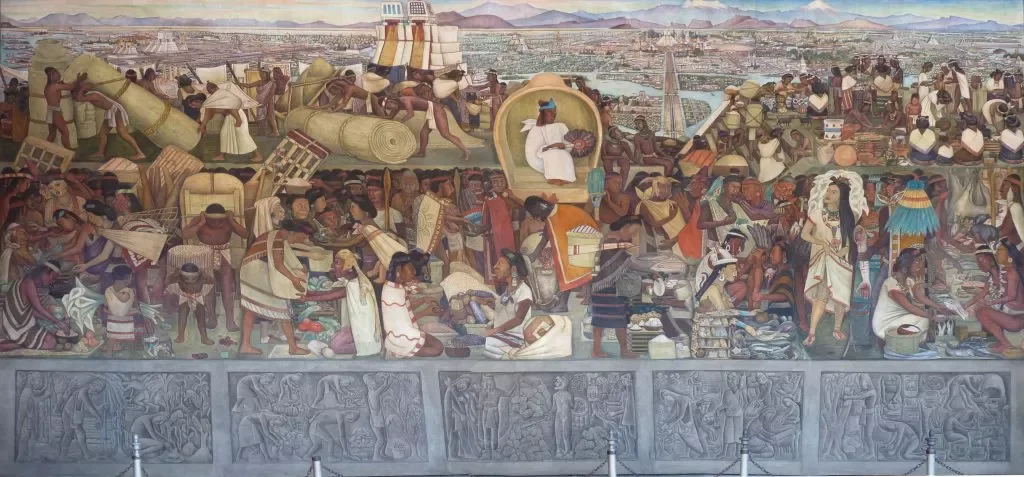
Over the next two centuries, the Mexica transformed Tenochtitlan into one of the largest and most sophisticated cities in the world. Through warfare, political alliances, tribute systems, and religious authority, they formed the Aztec Empire alongside the cities of Texcoco and Tlacopan in the Triple Alliance. Their civilization became known for monumental architecture, advanced agriculture such as chinampas, elaborate religious rituals, military organization, poetry, astronomy, and rich artistic traditions.
Architecture
The Mexica expressed their power and cosmology through monumental architecture, constructing massive temples, pyramids, palaces, and ceremonial plazas throughout Tenochtitlan. At the center stood the Templo Mayor, a towering dual temple dedicated to the gods Huitzilopochtli and Tlaloc, symbolizing war, fertility, and cosmic balance. Their architecture transformed the city into both a political capital and a sacred reflection of the universe.
Advanced Agriculture
To sustain their growing population, the Mexica developed advanced agricultural systems known as chinampas, or “floating gardens,” built within the shallow waters of Lake Texcoco. These fertile artificial islands allowed for continuous cultivation of maize, beans, squash, flowers, and other crops, making Tenochtitlan one of the most productive urban centers of the ancient world. This innovation reflected the Mexica ability to harmonize engineering with the natural environment.
Religious Rituals
Religion shaped every aspect of Mexica life, and elaborate rituals were performed to maintain balance between humanity and the cosmos. Ceremonies included offerings, music, dance, processions, and human sacrifice, which the Mexica believed nourished the gods and sustained the movement of the sun and universe. These sacred practices reinforced their cosmology, where life, death, and renewal existed in constant motion.
Dance and Sacred Movement
Dance was an essential expression of Mexica identity, serving as a bridge between the human and divine worlds. Performed during religious festivals, military celebrations, and seasonal ceremonies, dances combined rhythmic movement with music, poetry, and elaborate costumes to honor the gods and reinforce communal values. Young people were trained in these traditions through institutions such as the cuicacalli (“house of song”), where they learned sacred songs, choreography, and ritual discipline. Azteca dance embodied the principle of ollin (movement) which allowed the dancers to maintain harmony between society, nature, and the cosmos.
Military Organization
The Mexica built a highly organized military society in which warfare served political, economic, and spiritual purposes. Young men were trained from childhood in discipline, endurance, and combat through schools such as the telpochcalli. Military achievement offered social advancement, while elite warrior orders, including Eagle and Jaguar warriors, became symbols of honor, power, and sacred duty within the empire.
Poetry
Poetry held a sacred place in Mexica culture and was often described through the phrase in xochitl in cuicatl — “flower and song.” Poems explored themes of beauty, warfare, mortality, friendship, and the divine, reflecting a civilization deeply aware of life’s impermanence. These compositions were performed with music and dance, preserving history, philosophy, and spiritual knowledge through oral tradition.
Astronomy
The Mexica closely observed the movements of the sun, moon, stars, and planets, integrating astronomy into religion, agriculture, and governance. Their calendar systems tracked sacred rituals and seasonal cycles with remarkable precision, helping determine ceremonies, warfare, and planting seasons. Celestial movement was understood as part of a living cosmos, reinforcing the belief that human actions were connected to the order of the universe.
Artistic Traditions
Mexica artistic traditions flourished through sculpture, featherwork, ceramics, goldsmithing, weaving, and painted codices. Artists created works that blended natural imagery with sacred symbolism, transforming materials such as jade, turquoise, obsidian, and quetzal feathers into objects of spiritual and political meaning. Their art was not only decorative but cosmological, designed to express divine power, identity, and the structure of the universe itself.
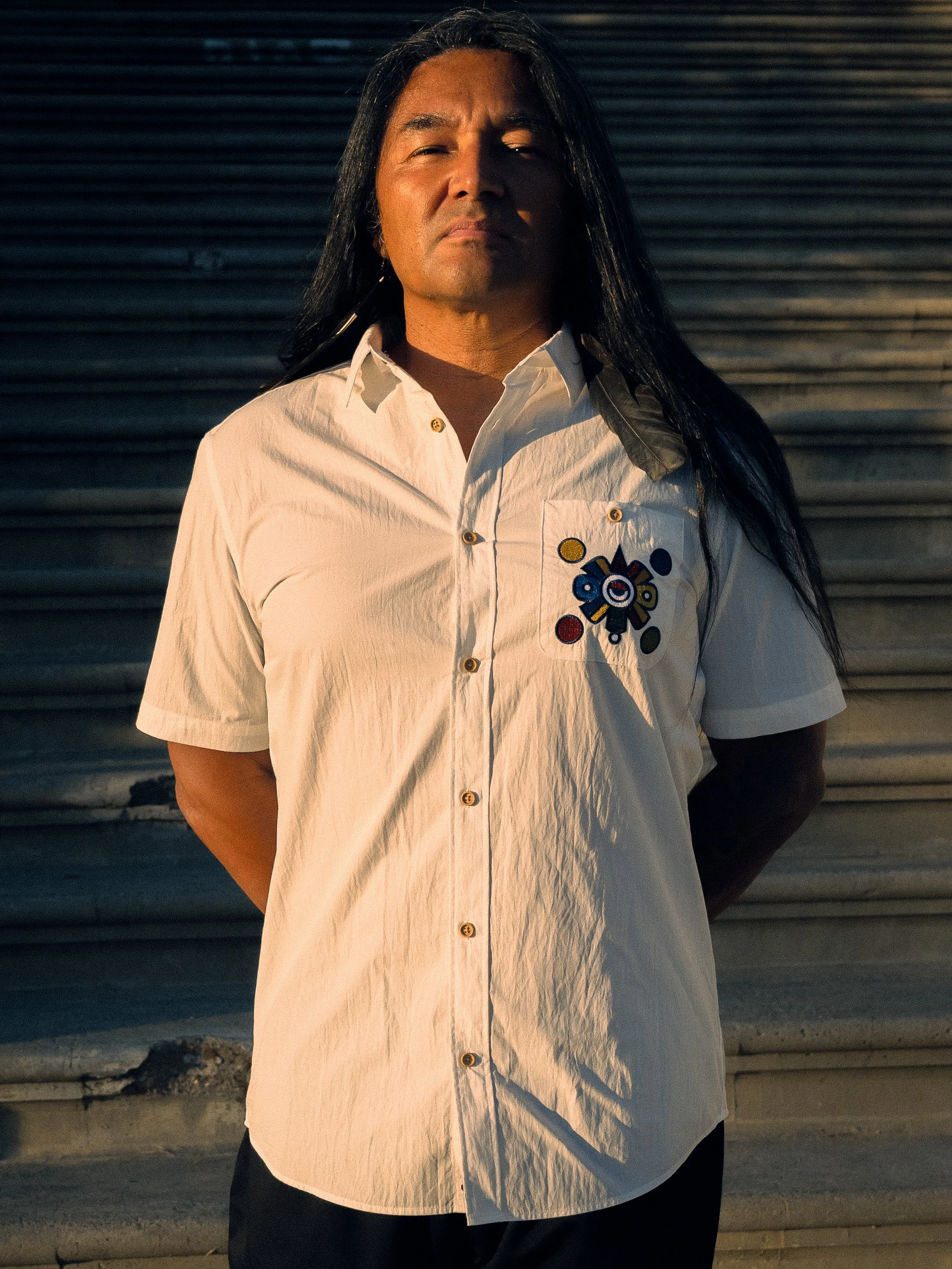
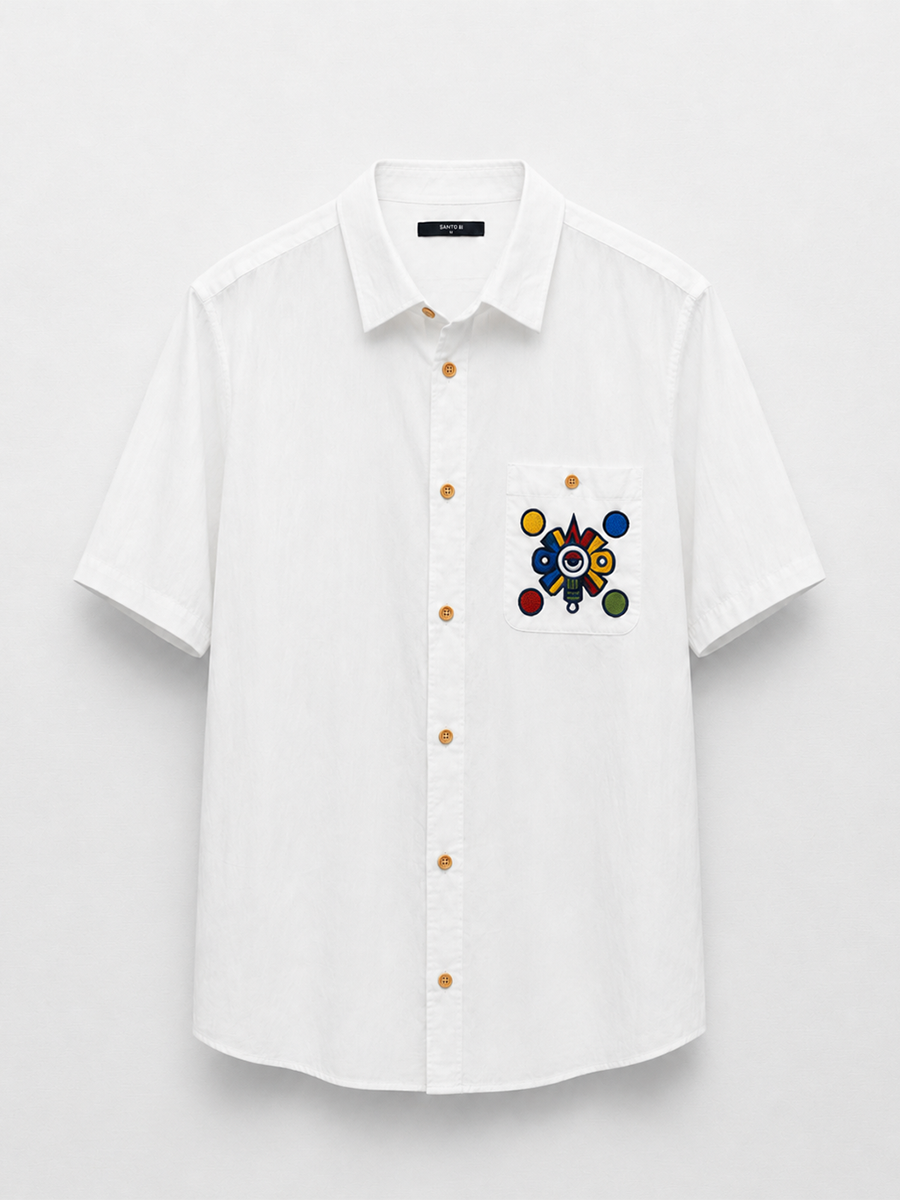
Look sharp, move well, stay cool. The Ollin Button Down is inspired by the Mexican guayabera and cut like a classic oxford shirt.